
Time was when November was one of the most pleasant months in Delhi, with just the whiff of winter in a city of extreme weathers. Not anymore. Foul air has replaced the aroma of roasted peanuts and chhole bhature as conversation starters in the national capital. Citizens have traded their old Celcius talk for a new set of numbers to moan about. Today, the air quality index regularly announced on TV triggers sighs and protests.
Environmental issues have clearly hit India’s political mainstream. Public protests erupted not only on the AQI that reached hazardous levels, but also on a new height-based definition of the Aravalli hills, sparking fears of illegal mining and environmental harm and forcing the government to backtrack despite a qualified Supreme Court sanction. A furore over water contamination deaths in Indore, showcased as India’s cleanest municipal zone, followed.
The environment ministry faced howls as the new year dawned after it amended guidelines to allow forest zones to have commercial plantations by private entities. The death of environment crusader Madhav Gadgil rang a sombre note on the importance of sustainability.
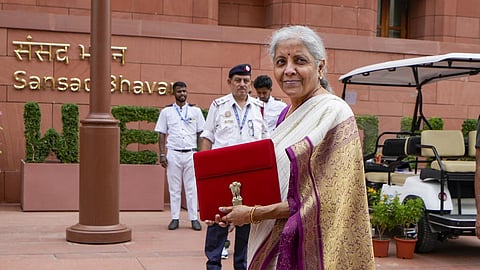
As Finance Minister Nirmala Sitharaman meets various interest groups to craft her annual budget for the new financial year, it is time to ask if environmental outcomes should be highlighted in the budgetary numbers so that we can take note of what the government is doing (or not) for sustainability in the world’s most populous and fastest-growing economy.
‘Green budgeting’ is unheard of in India despite decades of avowed political commitment to environmental issues. It tracks fiscal revenues and expenditure allocations by focusing on schemes and measures that affect the environment and sustainability. For starters, it is a sound way to measure public commitment to environmental goals. The Organisation for Economic Cooperation and Development has been promoting green budgeting since 2017, when it launched the Paris Collaborative at its One Planet Summit.
Historically, progressive economists in India have been monitoring health, education and gender issues addressed and outlays allocated as part of their toothcombing of budgetary measures. Such a focused analysis is much needed. But such an effort can invite trouble. The prestigious Delhi School of Economics courted controversy a few weeks ago as the Delhi University’s academic panel objected to its syllabus on ‘Economics of Gender’ that covered some historical and ideological issues.
Green budgeting may face similar pitfalls. But there has to be a beginning. Nearly 80 years after independence, India has seen two long spells of economic vision covering roughly 40 years each. The first four decades were a lot about socialist planning and government control, while the following years have seen an obsession with macroeconomic stability and its attendant points: inflation, interest rates and GDP growth. Both these worldviews have unconsciously sidestepped the environmental side effects of growth.
We are now looking at a scenario in which one kind of positive numbers results in an unfocused set of negative ones. An agricultural boom in some areas leads to the hazardous burning of stubble. Automobiles driven by a growing middle class result in traffic jams. Mountains of unregulated plastic and other waste pollute the air and water of our cities. The data centres powering the artificial intelligence boom currently under way will also leave a massive environmental footprint because of its humongous energy needs.
Green budgeting should hopefully connect the dots between the highs and lows of the growth story so that we can frame laws and spend taxpayers’ money that speak to a sustainable future. A beginning has been made in public consciousness over vehicle choice and use of public transport. But waste management, recycling and regulation of various economic activities that lead to unplanned urban growth need to be more formally analysed and integrated into policy-making.
Over the years, I have observed two peculiar intellectual obstacles in the path to green budgeting. On the one hand, a typical environmental expert talks little about money and how it influences human behaviour. On the other, growth-obsessed economists and industrialists routinely view environmental concerns as obstructionist. During the UPA years that preceded the current NDA rule, environment ministers ran into controversies over both obstruction and approvals for projects. Sustainable growth is a tricky subject that requires a connected view on various goals. But what we have had so far are people talking on growth and sustainability in separate silos.
Fortunately, new technologies and studies suggest that growth talk and green thinking can be more supportive of each other than previously assumed. That might help us do a reverse swing to a greener India that balances wealth and jobs, too.
The Council on Energy, Environment and Water, an independent think-tank, said in a recent study that India could attract as much as $4.1 trillion in investments and create 48 million jobs across emerging ‘green value chains’ by 2047.
There is a parallel concern that conversations on the environment are often captured by business lobbies that try to focus on profitable capital-intensive projects rather than the welfare of ordinary people or environmental results. As they say, outlays need to be matched to outcomes. Let’s begin with this budget.
Madhavan Narayanan | REVERSE SWING | Senior journalist
(Views are personal)
(On X @madversity)
