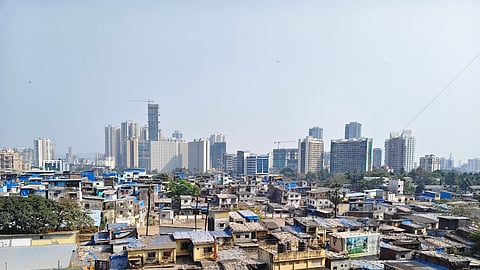

Mumbai has always been important in national politics—even before Independence, and more so in the post-Independence period. Once, the fates of Maharashtra and Gujarat—together, as parts of Bombay State till 1960—were anchored to this port city. Later, Mumbai became central to the demand for a separate linguistic state, as leaders of the Samyukta Maharashtra Movement (1956-1960) gave the call for “Mumbai saha Maharashtra” (Maharashtra with Mumbai), despite facing violent police action. Before the new state was carved out on May 1, 1960, the central government even considered making Mumbai a Union Territory or giving it to Gujarat. But Mumbai remained with Maharashtra.
Given this intense formative history linked to identity, the latest Brihanmumbai Municipal Corporation (BMC) election can be viewed as a major blow to the Marathi identity of the country’s richest municipality. The Shiv Sena’s loss of the BMC after almost three decades is seen less as a loss of resources and more as the erosion of a bastion of the ‘Marathi manoos’ (Marathi person). The tussle appears to be over the city’s identity, shaped since Bal Thackeray’s Shiv Sena displaced the Congress in 1997.
One has to delve into the city’s political economy and spatial distribution to understand how these elections may determine the future of state and national politics. Among the most notable factors is how the city’s neoliberal economic model has given an upper hand to the non-Marathi-speaking population—specifically, the Gujarati-Marwari business community. While many of Mumbai’s non-Marathi ghettos are swanky, they offer limited mobility for Marathi speakers because of prohibitive costs and relatively low average community incomes. Those who have not yet been forced to migrate to other municipalities within the Greater Mumbai Metropolitan Region remain confined to older buildings and chawls.
Recent infrastructural developments—such as the Coastal Road, the Bandra-Kurla Complex connector bridge and the Worli Sea Link—combined with a changing skyline, have altered perceptions of Mumbai. These could be highlighted by the new mayor and corporators to project a Gujarati-centric, if not cosmopolitan, outlook, ultimately blurring the visible markers of Marathi language and culture. In the long run, this will electorally benefit the BJP’s urban cadre.
Another aspect of the political economy is ‘gentrification’. The groundwork has already been laid for the new BMC to expand this phenomenon. Major projects of the city’s development department—including the redevelopment of chawls and other hutments in Worli, Ramabai Ambedkar Nagar and Dharavi—would now be easier to execute. The political gains could be long-lasting, as these ghettos’ collective aspirations historically produced voting patterns favouring the Congress, the erstwhile Republican Party of India and the Bharipa Bahujan Mahasangh (later called the Vanchit Bahujan Aghadi). Gentrification would disrupt this pattern and disperse these voters, giving a natural advantage to monolithic party structures like the BJP’s.
Electorally, the BJP has been in firm control of the state since the Assembly elections of 2024. The BMC results could further push the city’s real estate-driven development agenda. The central government, too, may promote Mumbai along the lines of GIFT City near Ahmedabad, with a view to woo fence-sitting Marathi voters and ensure a more complete electoral consolidation of the state.
There are two Mumbais within the city. One is the Mumbai of the Marathi working class, with limited resources and smaller housing units; the other is the wealthier Mumbai of the business community. Political competition between the two is determined not only by demographic and spatial factors, but also by the resources these communities command.
The general perception is that the BJP’s core constituency comprises Gujaratis combined with a growing Hindu north Indian population. Uddhav Thackeray’s Shiv Sena, Raj Thackeray’s Maharashtra Navnirman Sena and the Vanchit Bahujan Aghadi are nativist parties catering to Other Backward Classes, Dalits and migrants from the Konkan region. The Congress has retained sections of the Muslim vote, barring a few pockets in Mumbai. However, in both the Assembly and the BMC elections, the three regional parties were reduced to minority vote shares. The biggest blow to the Uddhav Sena was losing its bastion to the BJP, even though it succeeded in consolidating Marathi-speaking voters.
Growth under the BJP—especially projects like the high-speed rail link between Mumbai and Ahmedabad—could transform the city’s housing sector and further alter its demography. This, in turn, will shape the nature of work Mumbai offers over the next five years. As the city becomes increasingly service-oriented, the expanding services and business workforce may blur the traditional party lines, giving an advantage to the BJP’s evolving electoral formula.
The only major setback the BJP faced recently was its performance in the 2024 general elections, where its showing in Maharashtra was poor despite attempts at polarisation. With the BMC now under its control, the party will have time and resources to deepen its presence in Mumbai before the next general elections.
Mrudul Nile | Professor, Department of Civics and Politics, University of Mumbai
(Views are personal)