
On either side, a ‘situation’ looms. No less than 124 teachers have tested positive for Covid-19, and around five succumbed to the virus in Mysuru and Chamarajanagar. The scare was so tangible that the Karnataka government had little option but to scrap the primary school education scheme forthwith. If there was any dismay, it was only aired by non-stakeholders. Not teachers or the parents of minors.
Some experts found ‘lobbies’ at work behind the dismantling of Vidyagama. An innovative scheme no doubt, somewhat like what Tagore had envisioned a century ago in a small hamlet in Birbhum, Bengal, called Shantiniketan. Education under the trees, in the open air, not within cloistered classrooms. The idea then was to break the shackles of formal education, to take it back to the lap of nature, to experiential learning, and recreate aspects of tradition. Vidyagama was designed to break the chain of a virus that has, inter alia, disrupted the rhythms of education globally.
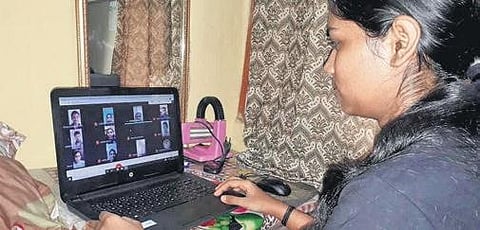
As the name suggests, Vidyagama was to send education—in the shape of the educator/mentor—right to the doorstep of students, or student groups. That is, to the nearest banyan tree. This was to help the government and the aided schools, unequipped with data-enabled gadgetry, to check the progress students were making on learning material sent to them. This was the offline answer to online teaching, the new norm in the times of corona. But first villagers started resisting these new comings and goings, rightly spotting the risk, then the teacher enthusiasm waned pretty soon too, especially after actual infections were reported, despite safety guidelines.
The floods and monsoon rains didn’t help. The politicians, always alive to the public mood (and sensitive to it when it suits them), decided enough was enough. Rural education has lost out, as of now. In a large swathe of India, and Karnataka, where broadband is as scarce a commodity as the electronic playthings you take for granted.
