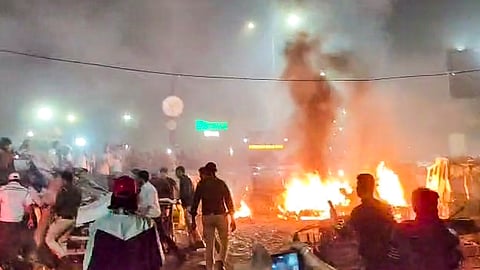

The explosion near Delhi’s Red Fort on Monday evening has raised fresh concern over the state of India’s internal security. Preliminary reports suggest a car blast close to the metro station that serves the busy heritage precinct. The cause is still under investigation, and the authorities have not confirmed whether it was a deliberate act of terror or a catastrophic accident.
Even so, the choice of location has revived unease. The Red Fort, from where India marks its Independence Day each year, is both a historic and symbolic site. Any incident in its vicinity carries psychological impact far beyond the immediate loss. Delhi has seen similar episodes before; each time, they have tested the capital’s preparedness and its confidence in everyday safety.
The timing compounds the concern. The explosion comes as agencies in Jammu and Kashmir claim to have dismantled a large, transnational terror module with possible overseas links, and Gujarat’s Anti-Terrorism Squad reports arrests of individuals allegedly associated with radical networks planning a biological attack. While no direct connection has been established, the coincidence of events across regions merits close scrutiny.
Over the past decade, India’s counter-terror effort has strengthened its border and intelligence capacities. Yet, urban preparedness often lags behind. Policing structures remain reactive, and inter-agency coordination tends to tighten only after an event. The danger today lies less in infiltration from across the border than in the quiet spread of radical influence and logistics within ordinary spaces—apartments, workplaces, universities.
If early findings confirm a planned attack, it will signal a shift back to low-cost, high-visibility terror operations designed to erode public assurance rather than inflict mass casualties. If not, the incident should still serve as a stress test for urban safety and crisis response.
Either way, the message is clear: vigilance cannot be seasonal or reactive. Intelligence, policing, and civic alertness must operate as a single system, not a chain of afterthoughts. Terror may adapt its form and face, but the challenge for the state remains the same—to stay one step ahead, calmly and without complacency.
