
History is fiction in retrospect. The fact of India’s independence struggle is indisputable. But there are many readings—and they vary. As years go by, the versions multiply. And history begins to read like fiction.
There is a growing market for radical retelling. Audrey Truschke’s India: A History of 5,000 Years takes the Mughals—long vilified in school textbooks as marauding invaders inimical to Hinduism—and paints them as builders of culture, syncretism, and debate.
In liberal interpretation, Akbar is a version of Jawaharlal Nehru minus his proficiency in English. Akbar fought many wars, but the trend was to focus on his secular spirit. The founding of his religion Din-i-Ilahi (Faith of god), for example, is generally seen as an attempt to bring various religions together. A syncretic initiative, according to Truschke. But Din-i-Ilahi could be seen as a clever move to suppress Hindus. This interpretation infuriates one set of readers and comforts another.
William Dalrymple’s The Last Mughal does something similar for Bahadur Shah Zafar, recasting him from a weak, decadent ruler to a tragic symbol of cultural decline at the hands of the British in 1857. Here, too, the facts—the mutiny, exile to Rangoon—don’t shift. What shifts is the colour: from shame to martyrdom; a canonisation of sorts after more than a century.
Shashi Tharoor’s An Era of Darkness strips the ‘civilising mission’ of colonialism of its pretense, and presents the British Raj as a sustained act of economic vandalism that drained India of wealth. This wealth may be great, but it is arguable if India was unified as a territory in a political or economic sense for long earlier. Tharoor’s argument that the results of the British administration were mass suffering, communal tensions, famines, and epidemics discounts that all of it was there also before the colonials came over.
Younger historians are joining in this endeavour of writing non-fiction with tropes of fiction. Dinyar Patel, in Naoroji: Pioneer of Indian Nationalism, elevates Dadabhai Naoroji from a footnote in parliamentary history to an intellectual force behind the ‘drain theory’, quantifying how Britain syphoned India's wealth. Patel argues that Naoroji's pamphlet Poverty and Un-British Rule in India wasn’t just data—it was a weapon that armed patriots with irrefutable evidence, turning abstract grievances into a ledger of loss.
Arun Anand unearths buried episodes in The Forgotten History of India (2024), spotlighting events like the 1967 Sikkim border skirmish at Nathu La and Cho La, which official narratives gloss over as mere ‘incidents’.
Anand insists these omissions serve political amnesia, and by resurrecting them, he forces readers to confront how borders are still a contested terrain. This is revisionist. No matter the sensitivities involved, no ruler is likely to play down a victory.
Hilal Ahmed’s A Brief History of the Present: Muslims in New India (2024) brings this revisionist wave into hyper-contemporary, tracing how post-2014 policies have reshaped Muslim self-perception, not through ancient caliphates and other extra-territorial loyalties, but through everyday encounters with citizenship laws and lynching. Ahmed explains that history is smoking hot in its immediacy. We are not debating Aurangzeb anymore; we are debating Aadhaar cards through the prism of partition's unhappy ghosts.
Revisionist history spares none. For decades, Mahatma Gandhi’s image has been of a frail prophet of non-violence. But biographies now ask us to see him also as a shrewd tactician, a political manipulator of symbols—loincloth, salt, spinning wheel, and his ambiguous tolerance of killing cows.
Tipu Sultan has perhaps suffered the most violent revisions in recent times. That he fought the British is a fact. But does it mean he was pro-Hindu, or pro-India? This is a rather false dichotomy, given the times and its mores. If you believe the earlier version, Tipu was the sword-arm of Indian resistance against colonialism. In some recent versions, he was a religious bigot crushing his Hindu subjects.
The partition, too, has shifted shape. Once framed primarily as Britain’s final act of divide-and-rule, it is now discussed in terms of a failure of Indian leadership. The ambition of political careers is increasingly seen as the reason for the division.
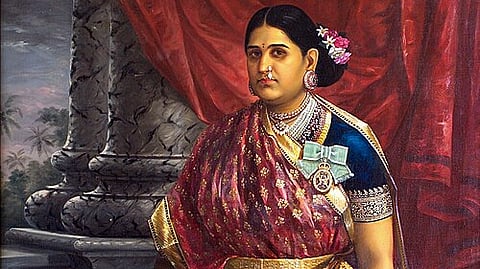
Why the appetite for history now? Because identity itself is under negotiation. Every claim about who we are today requires a certificate from the past. That is why books like Manu Pillai’s The Ivory Throne, on the Travancore royal family—favouring rather correctly the matrilineal or feminine influence in the reformist politics of Travancore—are doing well.
Historical non-fiction is exploding due to a hunger for narratives that unpack political critiques and cultural identities amid rising nationalism and communal debates. Young writers like Patel and Anand tap this vein. They blend rigourous scholarship with accessible outrage—proving that footnotes can go viral when they indict the present.
History, as a telling, has been relativised. One voice finds grandeur in Ashoka’s remorse, another finds only the bloodshed in Kalinga.
It’s not what happened, but how you remember it, said Gabriel García Márquez. The ruins don’t move. But historians circle it, shifting the light, casting new shadows, telling us new stories about the same, silent stones.
C P Surendran | Poet, novelist and screenplay writer whose latest H novel is One Love and the Many Lives of Osip B
(Views are personal)
(cpsurendran@gmail.com)
