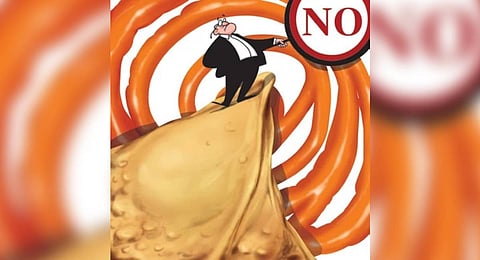

In a nation where the crunch of a samosa and the syrupy swirl of a jalebi are as much a part of life as monsoon rains and cricket fever, the Union health ministry lobbed a culinary grenade into the heart of India’s street food culture. A directive, cloaked in the guise of health consciousness, has sparked a firestorm of outrage, memes and defiance, threatening to tarnish the golden glow of our beloved snacks.
Last month, Union Health Secretary Punya Salila Srivastava unleashed a culinary calamity through his letter to all ministries and departments urging them to put up “oil and sugar boards” in public spaces like cafeterias and lobbies, spotlighting the hidden fats and sugars in snacks like samosas, jalebis, vada pav, kachoris, and even pizzas and burgers. Later on, the ministry denied that the directive was meant to target any specific products. However, the damage was done.
What were the compulsions for the government to get into the controversy? The justification given was combating India’s rising tide of obesity and non-communicable diseases—with The Lancet forecasting a grim 44.9 crore overweight Indians by 2050. But this vaguely-worded edict, dripping with Western wellness dogma, has misfired spectacularly and ignited a debate that has pitted bureaucratic overreach against cultural pride.
Samosas and jalebis aren’t just food; they’re the heartbeat of Indian celebrations, from Diwali feasts to wedding banquets, and no government memo should dare meddle with that sacred bond. The health ministry’s directive, ostensibly a ‘behavioural nudge’, reeks of a deeper agenda, one that seems to begrudge the global rise of Indian cuisine. Why else single out samosas and jalebis, when the real culprits like ultra-processed chips, colas and cookies lurk in every supermarket aisle?
The advisory also lists other Indian dishes drowning in oil and sugar: pakoras, gulab jamuns, and banana chips, all flagged as dietary villains alongside their Western counterparts. But Indian food isn’t just about calories.
Take dal bati churma, a Rajasthani marvel of lentils, baked dough, and sweet crumbled wheat, or Bengali delicacies like luchi and aloor dum, rasgulla and sandesh, or the opulent Mughlai biryanis and kormas. These aren’t mere meals. They are cultural heirlooms woven into festivals, family gatherings, and the very fabric of India’s identity. Each dish carries an in-built health corrective system—spices like turmeric and cumin aid digestion, while the community-led act of sharing food fosters mental well-being. To slap a warning on these is to spit in the face of centuries-old wisdom and erase India’s rich food heritage.
The world has seen governments meddle with food habits before with the same sanctimonious zeal. In Mexico, warning labels on high-sugar, high-fat foods like sodas and chips have been mandatory since 2020, aiming to curb obesity rates that rival India’s. The UK has toyed with taxing sugary drinks, while Singapore’s Health Promotion Board nudges citizens away from high-calorie hawker dishes like Char kway teow, a stir-fried noodle dish swimming in oil.
These global precedents share a common thread. All of them target processed junk like sodas, fries, doughnuts. These are beautifully packaged foods engineered for addiction by corporate giants.
In India, though, the health ministry’s focus on street food feels like a betrayal—as if samosas, lovingly hand-folded by a roadside vendor, are as sinister as a Big Mac. Western snacks like burgers (1,377 kcal for a 471-g pizza, per the Food Safety and Standards Authority), French fries (342 kcal for 117 g), and chocolate pastries (loaded with 32g sugar per gulab jamun-sized serving) are no health saints. Yet, they have escaped the cultural crosshairs. Why? Perhaps because Indian dishes like curry, dosa, idli, paratha and biryani have conquered global palates from London’s curry houses to New York’s dosa carts, and someone, somewhere isn’t thrilled about it.
Social media has erupted in a glorious rebellion, with X posts capturing the public’s scorn and wit. “Samosas & jalebis get cigarette-style health alerts in India,” screamed one user, mocking the absurdity of equating a samosa to tobacco.
Another post marvelled at the irony: “Samosa and jalebi were getting popular in Western [sic],” only to be slapped with warnings at home. Yet another said: “You don’t eat jalebis and samosas for health. You indulge for delight.”
The backlash grew so fierce that the ministry issued a clarification on July 15, insisting no warning labels were planned for samosas or jalebis, just “educational boards” to promote moderation. Too late; the damage was done. This isn’t just about food; it’s about identity.
Samosas and jalebis aren’t mere snacks. They’re the crackle of Diwali evenings, the sweetness of Eid celebrations, the warmth of a rainy day’s chai break. To target them is to target India’s soul.
The government’s directive, piloted from AIIMS Nagpur, smacks of a Western narrative that fetishises kale and quinoa while sneering at the spiced, fried glory of Indian cuisine.
A credible food expert nailed it on Instagram: “Ultra-processed food products are the real problem… Samosa and jalebi ne aapka kya bigada hai?” She’s right. Colas, chips and cookies, churned out by multinational corporations, deserve clearer warning labels, not the street vendor’s labour.
The ministry’s failure to distinguish between cultural treasures and corporate junk exposes a troubling disconnect, as if foreign educated policymakers in Delhi’s ivory towers can’t fathom the lives of ordinary Indians.
The initiative’s timing is particularly galling when one considers India’s health strides. The average life expectancy has climbed to over 76 years in 2024, up from 63.7 in 2000, according to published reports. Compare that to other developing nations like Nigeria (54.7 years), or even developed ones like the US (77.5 years), where the number is stagnating due to obesity and opioid crises. India’s progress owes less to government meddling and more to its people’s intuitive balance.
Indians are now making yoga and other exercises part of their wellness regime and mostly sticking to home-cooked meals. The Fit India and Healthy India campaigns are fine slogans, but they ring hollow when paired with misinformation that vilifies cultural staples.
Spreading fear about samosas hasn’t just misfired. It has eroded trust, stoked division, and handed ammunition to political adversaries like West Bengal Chief Minister Mamata Banerjee, who gleefully rejected the advisory as “unnecessary interference”.
She wrote on X: “Some media have reported that apparently samosas/ jalebis cannot be consumed from now on, based on instructions from the health ministry. This is not a notification from the government of West Bengal. We are not interfering in every matter. We shall not implement this.”
It’s evident that it was a bad initiative, plain and simple. The government has no business dictating what Indians eat, especially when its directive reeks of cultural ignorance and Western bias.
Indians know when to savour a jalebi or share a samosa. The ministry’s clumsy attempt at health reform has done more harm than good, sowing confusion and alienating the very people it claims to protect. It’s time to ditch the warning boards and focus on the real threats: regulate ultra-processed foods, educate without preaching, and let Indians eat their traditional foods in peace. Anything less is a betrayal of the nation’s palate, plate and pride.
Read all columns by Prabhu Chawla
PRABHU CHAWLA
prabhuchawla@newindianexpress.com
Follow him on X @PrabhuChawla