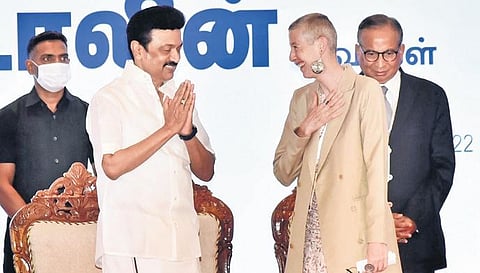

At a time when most states are still trying to recover from the pandemic-induced slowdown and struggling with the unmanageable fiscal deficit, fund crunch and dismal capital expenditure, Tamil Nadu is making a serious effort to attract investment. It sewed up a record 60 agreements in the recently-concluded conclave, for a cumulative investment of Rs 1.25 lakh crore. The state’s investment climate is stirred-up despite the setback of Ford’s exit. But it’s not yet time to celebrate.
One must first see how many of these deals fly off the drawing board. Interestingly, the bulk of the deals went to Thoothukudi, among the less developed districts in the south, potentially making it a hub in the renewable energy space. Since the DMK coalition came to power in May 2021, TN claims to have signed MoUs worth Rs 2.2 lakh crore.
The steady reversal in the investment climate reflects in the state’s recent elevation in the all-India ranking in ease of doing business, from 14 in 2020 to third place this year. It also rose six spots to 11 in the national ranking of the start-up ecosystem, though it has some more distance to trek up. But the efforts to draw investments from across industries have given wings to the state’s dream of becoming a trillion-dollar economy by 2030.
Amid the ballyhoo of deal-making, the government should not deviate from striking a balance between investments and the environment. Rules cannot be ignored to make life easier for the greedy corporate houses. For instance, the once-thriving garments and dyeing industries may have turned Tiruppur into India’s textile capital but not without making it an environmental dark spot.
The discharge of untreated effluents caused irreparable damage to Noyyal river. Similarly, in Pollachi, there are complaints about increasing pollution and contamination of well water and forest water streams frequented by wildlife. While setting up polluting industries, the government should keep a close watch. The development cannot be at the cost of the environment that is not easily renewable.
