
VIJAYAWADA: The Indian Meteorological Department (IMD) Amaravati along with KL University on Friday observed the World Meteorological Day, which is celebrated annually on March 23.
The event commenced with a keynote address by Sagnik Dey, Institute Chair Professor at the Centre for Atmospheric Sciences, IIT Delhi, focusing on the long-term implications of climate change on human health, particularly concerning diseases like malaria and dengue.
IMD Amaravati director S Stella underscored the necessity for proactive measures in light of escalating global temperatures. “If we do not take proper precautions keeping these changes in mind, we will be harming our next generation,” she noted.
“Rising temperatures have resulted in a surge of extreme weather events worldwide, including heatwaves, floods, droughts, wildfires, and intensifying tropical cyclones. Andhra Pradesh, too, has felt the impact, with 2023 witnessing a spike in heatwave occurrences,” she added.
IMD Amaravati chairman Prasada Rao emphasised the collective responsibility to safeguard land, sky, and water resources, urging heightened awareness among students and society at large. He said that the role of students is high at this stage, and IMD is ready to create adequate awareness about such disasters.
Former advisor of DST Sanjiva Rao, secretary Sagili Karunasagar, treasurer Satyanarayana, department employees, teachers, and students of KL University participated in the programme.
APSDMA advisory to people
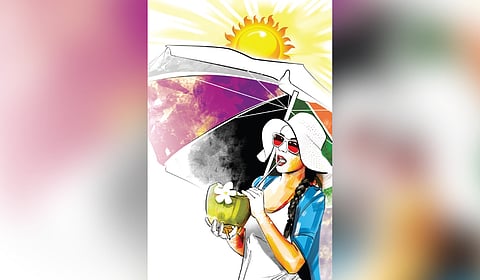
AP State Disaster Management Authority (APSDMA) managing director R Kurmanath issued an advisory to the people for the coming summer months, which are expected to be hotter than normal
Symptoms of sunstroke
High body temperature (103°F or higher)
Hot, red, dry, or damp skin
Fast and strong pulse
Headache, dizziness and nausea
Confusion and losing consciousness
Precautions
Keep updated about weather news aired on radio and TV
Drink sufficient water as often as possible, even if not thirsty
Persons on fluid-restricted diets should consult a doctor before increasing liquid intake
Use ORS, homemade drinks like lassi, lemon water, buttermilk, coconut water etc to keep yourself hydrated
Avoid alcohol, tea, coffee and carbonated soft drinks which dehydrate the body
