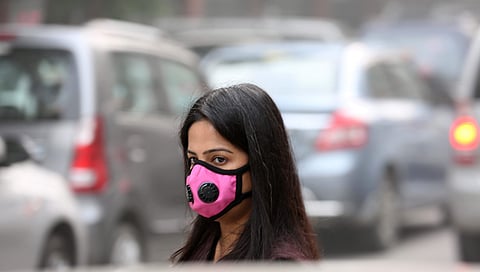

VISAKHAPATNAM: The three northernmost districts of Andhra Pradesh including Srikakulam, Vizianagaram, and Visakhapatnam have recorded an increase in PM10 concentrations in the National Clean Air Programme (NCAP) assessment for 2024-25 when compared with the baseline year 2017-18.
According to the data, Srikakulam’s average PM10 concentration increased from 69 µg/m³ in 2017-18 to 79 µg/m³ in 2024-25, reflecting a 14.5 percent rise.
Vizianagaram reported a smaller increase, from 72 µg/m³ to 74 µg/m³ during the same period, amounting to a 2.8 percent rise. Visakhapatnam recorded the highest increase among the three, with PM10 levels rising from 76 µg/m³ to 101 µg/m³, a 32.9 percent jump.
The information was furnished by Minister of State for Environment, Forest, and Climate Change Kirti Vardhan Singh in a reply to Hindupur MP BK Parthasarathi in the Lok Sabha.
A total of 13 cities in Andhra Pradesh are covered under the NCAP for air quality improvement. Of the 13, ten cities have shown progress in reducing PM10 levels in 2024-25 when compared to 2017-18.
Since the launch of NCAP, Rs 734.86 crore has been allocated for Andhra Pradesh, of which Rs 407.25 crore has been released to the municipal corporations of the 13 cities for implementing their clean air action plans.
As per official data, annual allocations included Rs 6.36 crore in 2019-20, Rs 152.28 crore in 2020-21, Rs 77.58 crore in 2021-22, Rs 75.06 crore in 2022-23, Rs 49.81 crore in 2023-24, and Rs 46.16 crore for 2025-26. No funds were released for the year 2024-2025.
PM10 comes from various human activities and natural sources. Human activities play a significant role in releasing PM10 into the atmosphere.
Vehicle exhaust, tire wear, and brake dust are major contributors, especially in urban areas with high traffic density. Construction sites, particularly those involving activities like crushing rocks and grinding, also release large amounts of PM10.
Industrial emissions from factories and power plants are another significant source.
Natural sources also contribute to PM10 levels. Dust from roads, fields, and other areas can become airborne and contribute to PM10 concentrations. Sea salt particles, particularly in coastal regions, are another natural source of PM10.
These particles can be carried inland by winds, affecting air quality in broader areas.