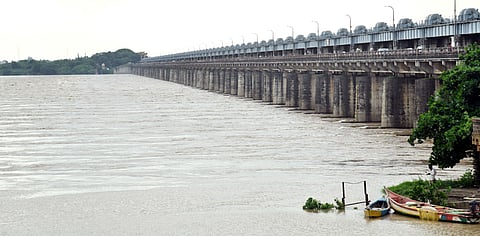

RAJAMAHENDRAVARAM: Due to heavy inflows of water and rains in the upland areas of Maharashtra and Telangana this monsoon season, Godavari River discharged a staggering 4,179 thousand million cubic feet (TMC) of water into the Bay of Bengal between June and October 15, while only 163 TMC was utilised for irrigation, drinking, and industrial purposes.
This massive loss of water has once again spotlighted the persistent issue of poor water management in one of India’s most fertile regions in India, the Godavari delta region.
Experts estimate that one TMC of water can irrigate nearly 10,000 acres of paddy. By that measure, the water released into the sea this year could have supported cultivation across more than 4.18 million acres — a missed opportunity for farmers in the delta who continue to struggle for irrigation during the Rabi season.
This year’s discharge volumes were recorded as follows: 26.21 TMC in June, 677.68 TMC in July, 1,219.40 TMC in August, 1,591.94 TMC in September, and 663.49 TMC in October (up to October 15), according to the Dowleswaram Barrage flood control room.
Historically, the Godavari discharges around 2,000 TMC into the sea during normal flood years. The highest recorded discharge was in 1986, when 3,000 TMC flowed into the sea. This year, the river exhibited an unusual flood pattern, with heavy inflows continuing beyond the typical June–August window and persisting through September and October.
Officials at the Dowleswaram Barrage continue to release nearly 250,000 cusecs of water daily, raising concerns about the lack of infrastructure to store or divert excess water for agricultural use. The situation has prompted renewed calls for strategic water conservation and distribution reforms to ensure that the Godavari’s bounty benefits the region’s farmers.
