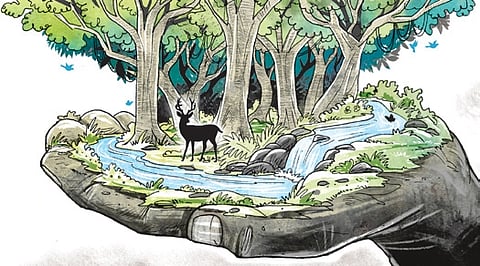

NELLORE: District Forest Officer (DFO) Mahaboob Basha said the Forest Department is intensifying efforts to expand green cover under the State government’s Harit Andhra Pradesh initiative, targeting plantations over 960.48 hectares during the current financial year.
Officials said the department has prepared more than 20.65 lakh saplings in its nurseries. Following recent rains, nearly 100 hectares have already been planted with species suited to the region’s soil and climate. Preparatory works, including pit digging and soil treatment, are complete in most remaining areas.
“Our target is to cover 960.48 hectares across Udayagiri, Kavali, Atmakuru, Nellore, and Nellore rural divisions. The rains have been favourable, enabling us to plant in 100 hectares already. Nurseries are well-stocked, and plantation sites are ready. By October, we are confident of achieving the target in full,” Basha said.
The programme is supported by Mahatma Gandhi National Rural Employment Guarantee Scheme (MGNREGS) funds alongside the Forest Department’s budget, providing environmental and livelihood benefits.
Thousands of rural workers are engaged in nursery raising, pit digging, watering, and aftercare of saplings.
Officials noted the mission aims to increase tree cover, combat climate change, improve groundwater recharge, and provide shade and shelter in urban and rural areas.
Plantations are being carried out on vacant government land, along highways and roadsides, in residential colonies, and within forest plantations.
Environmental activists and local communities have also welcomed the move. Environmental volunteer R Srinivas said, “Planting trees is not just about greenery—it’s about healthier air, better rainfall, and a sustainable future. It’s encouraging to see the government linking employment programmes like MGNREGS with ecological restoration.”
The district administration urged citizens, NGOs, and community organisations to participate. Officials said, “People’s participation is the key to sustaining plantations. We urge communities to adopt plantation sites, nurture saplings, and safeguard them as their own assets.”
