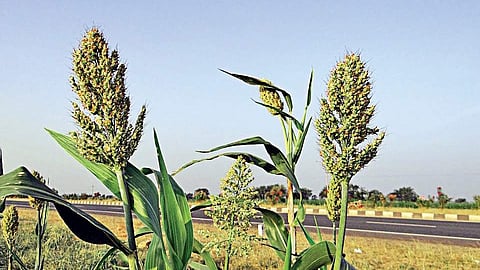

NELLORE: After three consecutive years of climate-induced setbacks to the Rabi chickpea crop, farmers in Nellore district are increasingly turning to sorghum as a more resilient and economically viable option.
Erratic rainfall, including excess rains and prolonged dry spells, has severely affected chickpea cultivation, leading to repeated losses. The crop area has plummeted from 29,582 acres to just 7,352 acres.
Rising input costs of Rs 25,000–Rs 30,000 per acre, coupled with untimely rains, pest infestations, wilt disease, labour shortages, and high wages, have further discouraged farmers.
In contrast, sorghum has emerged as a profitable alternative for rainfed black soils. Currently, it covers about 2,262 acres, with the area expanding each year.
Acharya NG Ranga Agricultural University (ANGRAU) and Krishi Vigyan Kendra (KVK), Nellore, have promoted the NTJ-5 (Nandyal Tella Jonna-5) variety through training programmes, awareness campaigns, and demonstrations, boosting farmer confidence.
“Repeated climate shocks have made chickpea cultivation highly risky. Considering the soil and rainfall conditions of Nellore, NTJ-5 sorghum is a more resilient and economically viable option,” said Assistant Director of Agriculture G Anita.
The NTJ-5 variety, adopted in villages including Kampasamudram, Balajiraopeta-Thopugunta, Nagula Vellaturu-Kandapuram, and Lakshmipuram, matures in 95–100 days, tolerates drought, and yields quality grain and fodder.
It requires only 3–4 kg of seed per acre, with pest management involving two to three sprayings. Group sowing and solar fencing are recommended to minimise bird and wild boar damage.
NTJ-5 sorghum delivers an average yield of 15–20 quintals per acre at a cost of Rs 15,000–Rs 20,000. With the Centre fixing the Minimum Support Price at Rs 3,699 per quintal, farmers gain added income security.
Agricultural officials said NTJ-5 sorghum offers a practical solution to the climatic, pest-related, and financial challenges faced by chickpea growers, ensuring yield stability and reducing risks of recurring losses.
