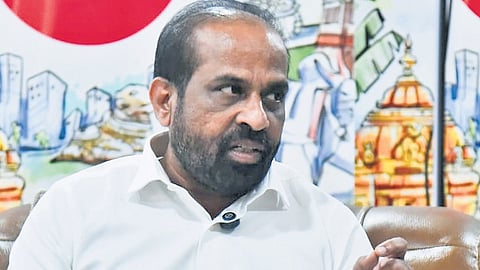

In this wide-ranging conversation, Health Minister Satya Kumar Yadav speaks openly about the challenges, shortcomings and progress within Andhra Pradesh’s healthcare system.
From efforts to curb food adulteration and check corruption in hospitals to plans for expanding trauma care, organ transplantation services and AYUSH institutions, the minister details a series of reforms aimed at strengthening and transforming public health delivery across the State.
The interview offers insight not only into policy decisions and administrative measures but also into the human concerns and political realities that shape healthcare governance in the State.
The previous government often claimed that they gave top priority to the health sector. They said they introduced several reforms which, according to them, benefited the people. Now that the NDA government has taken charge, what kind of legacy did you inherit from them?
As you rightly pointed out, the earlier government projected an image that it had done a lot for healthcare. They spoke of reforms and improvements, but on the ground nothing substantial was visible. Perhaps they had intentions, but execution was missing. Even in the case of medical colleges, they made announcements but failed to deliver. When we assumed office, what we actually inherited was misgovernance. Unauthorised absenteeism was rampant and attendance was not properly monitored. Outpatient services were disrupted, inpatient services were weak, and equipment in many hospitals was dysfunctional. Doctors remained absent for long periods without accountability. Many were posted in mismatched roles, contributing little to the system. Transfers were another major issue. Instead of being systematic, they were arbitrary. Even when guidelines were issued, influential doctors managed to return to their original postings. In fact, nearly 80% of transfers ended up being reversed. I took this as a challenge — to bring discipline, enforce mandatory transfers and restore credibility in the system.
The previous government often highlighted the ‘Family Doctor’ concept as their major reform. How do you assess that claim, especially in terms of primary healthcare?
The so-called ‘Family Doctor’ idea was not new. Even earlier, there was a system under the name of Sanchaara Chikitsa (mobile treatment). Merely renaming it does not qualify as a reform. In fact, during their five-year tenure, not a single new Primary Health Centre (PHC) was established. Without expanding PHCs, how can one claim to have reformed primary healthcare? Recruitment of doctors was also minimal. For instance, in 2021, they issued repeated GOs for 88 PHCs but failed to release funds. After we came to power, we sanctioned Rs 194 crore, adding 12 more PHCs and making it a total of 100 PHCs with proper funding.
The National Health Mission (NHM) and the Prime Minister’s vision for last-mile delivery of healthcare were clear: every 3,000 population should have a Village Ayushman Arogya Mandir. Our State was allotted 10,032 such clinics. But when we took charge, only about 1,500 had their own buildings; the rest were incomplete. Funds were available under the Finance Commission and PM-ABHIM (Ayushman Bharat Infrastructure Mission). Yet the previous government failed to secure them. Because they did not provide the required State share, nearly Rs 122 crore in 2021 and another Rs 255 crore later was lost. Even PM-ABHIM funds were returned unused.
As a result, in five years only 3,105 village health clinics were constructed. Even those were built with diverted funds — using MGNREGA allocations and partial Finance Commission grants. Instead of the planned Rs 20 lakh per clinic, only Rs 8 lakh from MGNREGA and Rs 12 lakh from the Finance Commission were pooled. Another serious lapse was in staffing. Nursing graduates appointed as Community Health Officers (CHOs) were mostly young women aged 25–30. Yet no provision was made for their accommodation in villages. Without proper housing, how could they stay and serve effectively? This was the reality we inherited. Our government has been working to correct these gaps, ensuring that village health clinics are properly funded, staffed and functional.
After the coalition government came to power, what concrete steps were taken to strengthen healthcare infrastructure, especially in terms of funding and upgrades?
Once we assumed office, our efforts ensured that the Centre sanctioned Rs 1,200 crore under the 15th Finance Commission and another Rs 560 crore under PM-ABHIM. Andhra Pradesh can proudly claim to be the first State to achieve such performance-based incentives under NHM. In fact, within just 20 months we secured 42% of the allocated funds, compared to the previous government’s 48% over four years. This efficiency earned us an additional Rs 100 crore as a performance incentive. With these resources, we are constructing 4,500 new buildings, each costing Rs 55 lakh under PM-ABHIM. Many stalled projects — foundations or half-built walls — are now being completed. Panchayati Raj institutions have been made the executing agencies, and by the end of this year all 4,500 will be ready. This raises a fundamental question: if we could achieve this in less than three years, why did the previous government fail to deliver in five?
'Called a ‘villain’ for pushing tough health reforms'
You mentioned that arbitrary transfers were a major challenge. But enforcing strict rules often makes you unpopular. Did you face pressure from ministers, party leaders or influential people when doctors approached them for transfers?
Absolutely. In fact, I am being labelled a ‘Pathala Bhairavudu’ (villain) for taking a tough stance on healthcare reforms, but someone has to do it. The system was in bad shape after the previous government and it needed to be corrected. Whenever a doctor approached a minister, a well-known leader, a relative or even a party functionary, the request would eventually land on my desk. They would insist, “It’s just a transfer, why not approve it?” But what they failed to see is that every such move directly affects patient services. I have no personal interest in these matters. My only concern is the patient’s interest. That is why we made the transfer process transparent and binding. Today, mandatory transfers are strictly enforced. Exceptions are considered only on serious health grounds, mutual grounds or spousal grounds. Our philosophy is simple: doctors chose this profession as a sacred service, not merely as a career option. With that spirit in mind, we implemented transfers in a way that strengthens service orientation rather than undermines it.
'Feeder ambulances, roads to improve healthcare in tribal areas'
In Agency areas like Alluri Sitarama Raju district and other tribal belts, infrastructure facilities are very poor. We often see pregnant women being carried for kilometres to reach hospitals. What is your response to this situation?
It is indeed a very unfortunate reality. I do not want to criticise past governments unnecessarily, but the truth is that tribal regions have long been neglected. Whenever such incidents occur — like a woman being carried for 3 km without a road — the immediate question is, “Where is the Health Minister?” But the real issue is that hospitals cannot take responsibility until patients reach them. That is why we are now focusing on roads and connectivity under PM Gram Sadak Yojana, a centrally sponsored scheme. Earlier, matching grants were not provided, so road construction stalled. Now, with proper funding, roads are being built.
Secondly, we strengthened the feeder ambulance system. In difficult terrains, large vehicles cannot reach villages. So feeder ambulances — essentially bikes with side units — were introduced to transport patients to the nearest point where a 108 ambulance can take over. When I reviewed the system in Parvathipuram, only 119 were functional. We refurbished them, and today 122 feeder ambulances are running, with tenders floated for further upgrades.
Thirdly, we initiated multi-specialty hospitals in tribal areas. At five locations —Guttayigudem, Rampachodavaram, Donal, Parvathipuram and another site — we sanctioned 100-bed hospitals, each costing around Rs 50 crore. Earlier, only Rs 33 crore was spent in four years. After we came in, we added Rs 62 crore. NABARD funding was lost due to a lack of matching grants, so now we are pursuing completion under the Special Assistance for Capital Investment Programme.
How do you plan to sustain these hospitals in remote regions?
We are encouraging PPP models alongside government investment. Under NTR Vaidya Seva, private players are reimbursed for free services. To make it viable, we are offering up to 40% viability gap funding and land support. The policy is simple: private hospitals provide 70% of services free and charge for the remaining 30%. We are also planning an investors’ meet in the health sector. In the first phase, we identified 61 constituencies without 50-bed hospitals. Multi-specialty hospitals of 100–200 beds will be established there. Once the Chief Minister approves, construction will begin, ensuring that even tribal and remote areas receive advanced healthcare.
'Food safety vans set to roll out with instant testing'
Food adulteration is a hot topic in the State. Recently, there was a case of milk adulteration in Rajahmundry, but there is no food testing lab in the State. Why is basic infrastructure still missing 10 years after bifurcation?
Food adulteration and water contamination are serious concerns that directly affect public health. For years, the State lacked adequate laboratories, and the Institute of Preventive Medicine was neglected after bifurcation. Out of 729 sanctioned posts, only 144 were filled, and at headquarters alone, 279 posts were sanctioned but only seven were in position. We prioritised this issue immediately. We signed an MoU with the Food Safety and Standards Authority of India, which sanctioned Rs 85 crore in the first year. With their support, new labs were established in Visakhapatnam, Guntur and Tirupati. Construction is complete in Visakhapatnam and it will be operational next month, while Guntur and Tirupati are under construction. During this process, the Tirupati laddu adulteration case emerged and we requested special support. FSSAI sanctioned a dedicated lab for Tirumala, with TTD providing 12,000 square feet of space free of cost. This will be the first operational lab in the State and it will be inaugurated by the Chief Minister very soon.
How many labs will be operational and what about staffing?
In total, five State food laboratories are being set up — Visakhapatnam, Guntur, Tirupati, Kurnool and the special lab at Tirumala. We also secured permission to recruit 150 staff members for the Institute of Preventive Medicine. Additionally, the Centre sanctioned mobile food safety vans, each staffed with a food analyst and driver, to conduct on-the-spot testing across districts. Salaries and training will initially be funded by the Centre, reducing the burden on the State. Over five years, these labs will become self-sustainable, ensuring that food safety enforcement is not dependent on ad hoc measures but is institutionalised.
With recent incidents like milk adulteration, how is the government addressing food safety?
We are conducting raids across hotels, sweet shops and food outlets in Guntur, Vijayawada and other districts, issuing notices and spreading awareness. There are two levels of surveillance: normal surveillance, which involves routine checks with 40 samples per inspector, and statutory surveillance, which provides legally admissible evidence for prosecution. When violations are proven, offenders face stringent action, including imprisonment. Preventive medicine is not just about reacting to crises but about building systems that deter malpractice. By strengthening labs, staffing and enforcement, we are creating a culture of accountability in food safety.
A toll-free number for corruption complaints has raised awareness. Can we have one for food adulteration too at the State level? Isn’t it because of the lack of proper supervision and inspections that food adulteration is increasing?
Yes, we have a toll-free number, 1800-425-35387, specifically for food adulteration complaints. This number should be widely publicised through awareness campaigns so that citizens know they can report violations. Calls are monitored and complaints are forwarded to the relevant district food safety officers for immediate action. This system ensures that enforcement is not just top-down but also citizen-driven, giving people confidence that their concerns will be addressed.
Network hospitals are waiting for more than Rs 2,500 crore in dues. Critics claim they are cutting treatments due to fund shortages, forcing patients to pay upfront and seek reimbursement later. What is your take on this?
We inherited Rs 2,500 crore in arrears under Aarogyasri. Hospitals had provided treatment but payments were pending for years, creating mistrust between the government and healthcare providers. We are clearing dues systematically, releasing about Rs 350 crore per month. At the same time, we are working on a one-time settlement model with hospitals and banks to clear legacy dues permanently. This ensures that hospitals are not burdened with unpaid bills and patients continue to receive treatment without interruption. Aarogyasri is a lifeline for poor families, and restoring credibility in the system was one of our first priorities.
What about Aarogyasri coverage caps and accountability?
We recognised that the existing coverage caps were insufficient for families facing catastrophic health expenses. That is why we increased Employee Health Scheme coverage to Rs 25 lakh. We are implementing a hybrid model that combines government support with private participation, ensuring sustainability. Accountability has also been strengthened. Hospitals that indulge in malpractice face penalties, and packages are being standardised to prevent misuse. This ensures that patients receive the right treatment at the right cost and the system remains transparent. Aarogyasri is not just about financial support; it is about restoring dignity to patients who should not have to beg or borrow for healthcare.
Corruption in hospitals has been a persistent complaint. How are you tackling this?
Corruption in hospitals is one of the most damaging issues because it erodes public trust and discourages patients from seeking care. We introduced a system of mandatory signage boards in every hospital, clearly stating that if anyone demands a bribe, patients can call the 104 IVRS helpline. This has empowered patients to report corruption directly. Complaints are investigated promptly, and strict action is taken against offenders. Doctors who are found guilty face suspension, increments are withheld and disciplinary proceedings are initiated. As a result of these measures, corruption levels have come down significantly—from around 30–35% earlier to 26% now. While this is still not ideal, it shows that accountability mechanisms are working, and we are determined to bring corruption down further.
Opposition alleges government hospitals lack basic medicines and PHCs are out of anti-venom. How do you respond?
Medicine shortages were a serious issue when we took charge, with suppliers refusing to supply due to pending dues. We cleared Rs 600 crore in arrears to suppliers, restoring confidence in the system. Emergency medicines are now being supplied to 712 hospitals across the State. Procurement has been decentralised to avoid bottlenecks, and strict monitoring has been introduced to prevent shortages. Allegations of shortages, such as in the oxytocin case, are being addressed with transparency and accountability. Patients should not suffer due to administrative lapses, and we are ensuring that essential medicines are always available.
Outdated 108 and 104 vehicles, diesel fund shortages and staff strikes are hitting services hard, and the public claims they do not arrive on time in emergencies. What reforms have been introduced?
Ambulance services are a lifeline, especially in emergencies, and we recognised that they needed urgent reform. When we took charge, only about 600 ambulances were functional. We increased this number to 731 by refurbishing old vehicles and adding new ones. OEM maintenance contracts were introduced to ensure that vehicles are serviced regularly and remain in good condition. Cameras have been installed in ambulances to monitor patient care during transit, and a live tracking portal has been launched so that response times can be monitored in real time. These measures have significantly improved the efficiency and reliability of ambulance services, ensuring that patients receive timely care.
What is the current response time and how do you plan to reduce it? How is the golden hour being monitored?
The golden hour is crucial in saving lives, especially in cases of trauma and cardiac emergencies. We have introduced strict monitoring systems to ensure that patients are admitted within this critical window. Today, 96% of admissions are happening within the golden hour, which is a remarkable achievement compared to the past. The STEMI programme has been a game changer in this regard. By providing free injections to patients suffering from heart attacks, we have saved thousands of lives. Andhra Pradesh has become a national leader in this initiative, and the programme is being studied by other States as a model for replication. The integration of technology, ambulance reforms and hospital preparedness has ensured that the golden hour is no longer just a concept but a measurable reality in our healthcare system.
The High Court recently commented on bone marrow and organ transplants. What is your response?
The High Court’s observations highlighted gaps in Aarogyasri coverage, particularly for advanced procedures like bone marrow transplants. We have taken these comments seriously and expanded coverage to include such treatments. In the past year alone, we supported 3,257 procedures and spent Rs 624 crore on cancer care. Organ donation has also been encouraged, with 99 donations facilitated and 301 transplants completed. A milestone achievement was the first liver transplant conducted at King George Hospital in Visakhapatnam, which demonstrated that government hospitals can handle complex procedures. These steps show our commitment to ensuring that even the most advanced treatments are accessible to the poor under Aarogyasri.
Trauma care is often lacking in emergencies. What steps are being taken to improve this?
Trauma care is critical in saving lives during accidents and emergencies. We have sanctioned 44 Critical Care Blocks and trauma centres, which will be operational by the end of the year. Under PM-ABHIM, Rs 600 crore was sanctioned for this purpose. Fourteen centres are nearing completion, and another ten have been sanctioned. The Centre also announced trauma centres every 50–100 km along highways, and Andhra Pradesh has proposed 49 such centres. This will ensure that accident victims receive immediate care within the golden hour, significantly reducing fatalities.
'YSRCP went on renaming spree, not reforming healthcare'
The opposition accuses you of privatising medical education through PPP, even claiming they already built colleges. How do you respond?
Their claims lack credibility. Announcing huge buildings without land acquisition, tenders or funds does not amount to building a medical college. In places like Parvathipuram, not even land was identified, yet they tried to pass off unfinished structures as colleges. When challenged in the Council, they walked out instead of debating with facts. Parliamentary democracy demands accountability, and running away from debate shows their arguments are hollow. PPP is not privatisation—it is a partnership model endorsed nationally. States from Bihar to Karnataka have adopted it, and the Parliamentary Standing Committee as well as the NMC Chairman have recommended PPP to transform district hospitals into teaching institutions. The Government of India supports this with 20–30% viability gap funding. Land remains government-owned, fees are regulated by the Higher Education Regulatory Commission, and hospitals are empanelled under NTR Vaidya Seva to ensure free treatment for the poor. Students gain additional seats, patients gain better facilities, and the State gains infrastructure—all under government oversight.
Critics say PPP tenders stalled and investments were uneven. What is the real picture?
Many private players initially expressed interest, but when the Centre announced viability gap funding, investors waited for clarity. We immediately wrote to Delhi confirming that ten colleges would be built under PPP and sought central support. This was not fear or pressure—it was financial calculation. The imbalance in earlier spending is undeniable: out of Rs 1,500 crore, Rs 400 crore went to Pulivendula alone, while colleges in Adoni, Madanapalle and Markapuram received barely Rs 25–27 crore. Narasipatnam, which required Rs 500 crore, saw only Rs 10.8 crore spent. Such skewed priorities are unacceptable. NMC norms are clear—100 MBBS seats require a 420-bed hospital, 150 seats require 605 beds. Pulivendula was upgraded accordingly, but other colleges were left incomplete. Our approach is different: ensure real infrastructure, meet NMC standards, and use PPP with viability gap funding to expand student intake and healthcare simultaneously.
Out of the 17 medical colleges sanctioned for Andhra Pradesh, what is the current status, and why did the government move towards PPP?
Of the 17, three were centrally sponsored—Paderu, Machilipatnam and Piduguralla. Eleven were placed under NABARD funding, while urban locations like Rajahmundry, Eluru and Nandyal were under State schemes. Between 2020 and 2024, administrative sanctions ranged from Rs 475–600 crore per college, totalling Rs 8,500 crore. Yet only Rs 1,500 crore was spent, and just five colleges saw partial progress, with construction at 12–15%. For instance, Rajahmundry required Rs 500 crore but only Rs 70 crore was spent, leaving basic structures. After we came to office, we sanctioned Rs 986 crore in one year, but the funding gap was still 82%. PPP became unavoidable to bridge this gap.
Critics say PPP is privatisation. How do you address that concern?
The truth is, the previous government had already blurred the line by introducing management and NRI quotas in government colleges, charging Rs 12 lakh for management seats and Rs 20–22 lakh for NRI seats. We inherited this framework. Our PPP model, however, has safeguards: the government retains land ownership, private partners bear construction and operational costs, and 50% of seats remain under government quota. Fees are regulated by the Higher Education Regulatory Commission, and hospitals are empanelled under NTR Vaidya Seva to ensure free or subsidised care. This is not privatisation — it is a partnership to expand infrastructure while protecting public interest.
How does PPP align with NMC norms and benefit students and patients?
NMC guidelines now require 420 beds for 100 MBBS seats and 605 beds for 150 seats. Many earlier colleges sanctioned with 200–300 beds no longer meet norms. PPP ensures compliance, adds infrastructure and increases student intake. For every 100 seats, about eight extra seats are added; across ten colleges that equals 110 additional seats—like establishing a new college. Patients benefit because PPP hospitals must provide 70% of services free under NTR Vaidya Seva. Thus, PPP strengthens education, expands opportunities and improves healthcare delivery simultaneously.
Beyond new colleges, how are you strengthening existing facilities, especially for rising burdens like cancer?
We are not just building new institutions — we are completing stalled projects and upgrading hospitals. The State Cancer Centre sanctioned in 2017 with Rs 120 crore had stalled for five years; we completed it. We launched a Radiological Oncology Unit in Visakhapatnam, a Comprehensive Cancer Centre in Kakinada, and upgraded Guntur with a LINAC machine, making it a Level-1 cancer centre. New cancer centres in Anantapur and Kakinada are targeted this year. Screening is free, and treatment facilities are expanding. Cancer is devastating and expensive, so infrastructure must match the disease burden. Our twofold approach — strengthening existing facilities and completing projects through PPP — ensures continuity, expansion and quality healthcare across Andhra Pradesh.
Around 60–70% of the health budget goes toward salaries and recurring expenditure, leaving little for capital investment. Has there been any improvement in capex allocations?
That has been our consistent demand in cabinet meetings, and we have already made significant progress. In 2024–25, the total health allocation was Rs 19,000 crore, but only Rs 2,070 crore went to capital expenditure. This year, we raised capex to Rs 3,060 crore, an increase of Rs 1,000 crore. Revenue expenditure remains around Rs 16,300 crore, covering medicines, surgical supplies, ambulance services and sanitation. Earlier, capital expenditure was just Rs 790–800 crore; we raised it to Rs 2,000 crore and now to over Rs 3,000 crore. We are also tapping into Special Assistance for Capital Investment from the Government of India, which provides long-term loans at low interest, enabling us to fund infrastructure projects without straining State revenues.
What steps are being taken to strengthen secondary and primary healthcare infrastructure?
For secondary healthcare, we prioritised Rs 450 crore to strengthen community health centres, area hospitals and district hospitals. For primary healthcare, Finance Commission grants are being matched with State funds to improve PHCs and sub-centres. This ensures that both tiers of healthcare delivery are upgraded simultaneously, addressing gaps in rural and urban areas.
AYUSH seems to be receiving special attention. Can you elaborate?
Yes. Under the National AYUSH Mission, earlier governments neglected proposals —only Rs 38 crore was spent in the first two years after 2019. We revived it by submitting proposals worth Rs 100 crore in our first year, securing Rs 83 crore, and Rs 250 crore in the second year, securing Rs 166 crore. We sanctioned four new AYUSH medical colleges — Ayurveda in Dharmavaram and Kakinada, Unani in Podduturu (Kadapa), and Naturopathy in Visakhapatnam — each costing about Rs 70 crore. Five integrated AYUSH hospitals and 1,500 dispensaries are also being upgraded. This year, Rs 325 crore has been allocated for AYUSH, including Rs 125 crore for capital expenditure.
Is the upcoming Investment Summit focused on medical colleges under PPP?
No, the summit is not about medical colleges. Those projects are already moving forward with approvals and central government support. The summit is focused on multi-specialty and super-specialty hospitals in rural and tribal areas, where we are encouraging private investment with viability gap funding from the Centre. The idea is to attract investors, strengthen infrastructure and eventually position Andhra Pradesh as a medical tourism hub. We are experimenting with new collaborations—for example, with the Gates Foundation and Tata Medical & Diagnostics—to develop citizen-centric healthcare models like the Sanjeevan Model. These can be replicated across states and even generate revenue while serving the public.
How is technology being integrated into this vision?
Technology is central to our vision. We are piloting speech-to-text outpatient services in Guntur, where doctors’ consultations are digitised in real time. Accuracy is already above 90%. These digital records flow seamlessly into Ayushman Bharat IDs, ensuring continuity of care. Andhra Pradesh is the first State in the country to generate 4.88 crore ABHA IDs and over 8.5 crore digital health records. This means that in the future every citizen will have a complete digital health profile — from tests and medicines to X-rays and treatments. Doctors can instantly access past history, avoiding duplicate tests and improving treatment accuracy. We are also exploring robotic medical assistants, like those pioneered in private hospitals, to supplement nursing staff and reduce workload in resource-constrained areas.
So the summit is about both infrastructure and technology?
Exactly. On one side, we are building multi-specialty and super-specialty hospitals with private participation. On the other, we are integrating digital health technologies to modernise patient care. Together, these initiatives will strengthen healthcare delivery, attract investment and make Andhra Pradesh a leader in medical innovation and medical tourism.
'Full freedom for ministers, no interference'
With Chandrababu Naidu on one side, Pawan Kalyan on the other and Lokesh trying to outdo them, has there been any interference in your department or freedom of functioning, given the coalition nature of the government?
There is one more global leader in the NDA — Narendra Modi. Let me be absolutely clear: there has been no interference whatsoever. In our government, ministers have complete freedom to manage their departments. Transfers, appointments and administrative decisions are taken independently. If Lokesh garu or anyone else has a request, it is routed through proper channels, but there is no compulsion or external pressure. In cabinet meetings and review sessions, we are free to raise issues openly. The Chief Minister conducts monthly reviews, guiding us with his experience and offering solutions to problems. His approach is consultative — he discusses even small matters with ministers and colleagues, encouraging collective decision-making. So yes, ministers enjoy complete freedom in their respective portfolios while benefiting from the Chief Minister’s continuous guidance.
There seems to be some dissatisfaction among senior leaders from allied parties and families. Some feel that nominated posts under the 60-30-10 formula are not being reflected on the ground. How do you see this situation?
In any coalition, distractions and dissatisfaction are natural. We are different parties brought together in the larger interest of the State. Each party has its own ideological background and cadre expectations. But let me clarify — there was never any formal agreement on percentages of posts or positions. What exists is a practical understanding: depending on the strength of each party in a constituency and the availability of suitable workers, appointments are made. When you have 20 aspirants for four posts, dissatisfaction is inevitable. It is not unique to our coalition — it is part of political life. These issues are discussed within the party and resolved collectively. So yes, some dissatisfaction exists, but it is manageable and expected. It does not affect governance or the unity of the coalition.
'Transparency, accountability and tech at heart of reforms'
What is the one biggest change that will leave Satyakumar’s mark?
This is a coalition government, and as the lone minister from BJP I cannot claim credit for achievements individually. All credit goes to the collective leadership, especially the Chief Minister, who guides us at every step. But if I must highlight my focus, it is on three things: containing corruption in hospitals and the health system, strict accountability for doctors and staff — ensuring attendance, discipline and ethical conduct — and leveraging technology to improve healthcare quality. One major initiative is the Sanjeevani programme, which is citizen-centric healthcare. We piloted it in Chittoor, and the results were encouraging. Once rolled out across the State, it will become a nationally discussed model of healthcare delivery. So, if there is a mark I leave, it will be in strengthening transparency, accountability and technology-driven healthcare reforms. But the credit belongs to the government as a whole, under the Chief Minister’s direction.
What is your broader vision as Health Minister within the coalition government?
My broader vision is to justify the responsibility entrusted to me by contributing meaningfully to the Chief Minister’s dream of Swarnandhra Pradesh and the Prime Minister’s vision of Viksit Bharat. Healthcare is not just about treating illness; it is about building systems that empower citizens, restore dignity and create opportunities for growth. By focusing on infrastructure, accountability and technology, we are laying the foundation for a healthier, more prosperous Andhra Pradesh. This is not just about immediate reforms but about creating a legacy that future generations can build upon.
A candid conversation with TNIE’s BSN Malleswara Rao, S Guru Srikanth, S Viswanath, Phanindra Papasani and Y Brahmaji at the inaugural of AP Dialogues.
