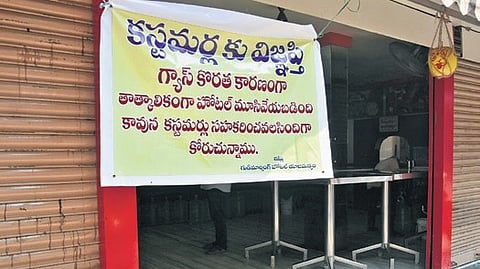

VIJAYAWADA: The ongoing disruption in LPG supply is dealing a severe blow to the food business sector, a key source of livelihood that provides employment to thousands of people and supports local economic activity across the state.
With LPG cylinders becoming scarce, street vendors, fast-food centres and small hotels in the state are struggling to continue their daily trading activity, raising concerns over income losses and the wider economic impact.
Street vendors and small hoteliers say the non-availability of Commercial LPG cylinders has disrupted their daily cooking activities, forcing many to scale down operations. Several small food stalls, tea shops and roadside eateries have shut down due to the shortage.
Fast food centres and tiffin stalls are among the worst affected. Many of these establishments usually earn around `1,000 to `2,000 per day, which is used to meet household expenses.
With LPG refills becoming difficult to get, daily income has taken a significant hit, leaving many vendors struggling to sustain their businesses.
The disruption has also affected employment in the informal food sector.
Small eateries and fast-food stalls usually depend on helpers and daily wage workers, many of whom are now left without work as several outlets have either reduced business activity or shut down temporarily.
Livelihood affected
Many youths who opted for small food businesses after completing graduation or higher education are also facing difficulties due to the LPG shortage. Several of them had chosen the food business as a means of livelihood after opting out of regular jobs citing low salaries and limited opportunities. However, the present disruption in LPG supply has put their small ventures under severe strain.
K. Ravi Kumar, who runs a fast-food stall at Eat Street in Vijayawada, said he managed to continue operations for a couple of days despite the shortage but may now be forced to shut down his stall due to the non-availability of commercial LPG cylinders.
He said the business was the primary source of income for his family and the current situation has pushed them into uncertainty.
“If the supply is not restored soon, we will have no option but to close the stall temporarily,” he said, adding that the shortage has severely affected their daily earnings and placed an additional burden on his family.
Several small vendors echoed similar concerns, stating that the lack of regular LPG supply has disrupted their businesses and left them struggling to sustain their livelihoods.
The shortage has particularly affected busy urban areas where roadside eateries cater to workers, students and commuters.
Traders fear that if the disruption continues, it could push many small vendors into financial distress.
