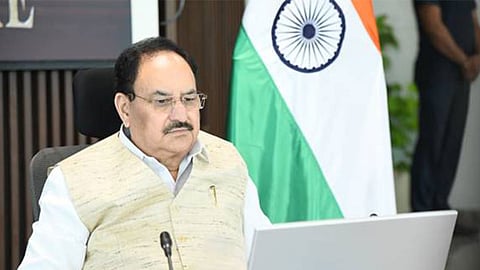

NEW DELHI: Union Health Minister JP Nadda on Wednesday called for proactive preparedness, intensified surveillance, and strengthened hospital readiness to prevent dengue outbreaks in the national capital.
Chairing a high-level review meeting on dengue preparedness and prevention measures, he directed the state government to adopt innovative strategies to foster dengue awareness in the community, such as conducting special drives in schools, labour camps, youth clubs, and other dengue-prone areas, like market associations.
Emphasising that the state and municipal bodies should be ready to proactively anticipate and prepare for any potential dengue upsurge, he highlighted the message of “Jan Chetna through Jan Bhagidari,” and called upon states to actively engage with ward commissioners, elected representatives, and Resident Welfare Associations (RWAs) in awareness and prevention efforts.
He also directed the state government to scale up community engagement through IEC activities, especially during the “Anti-Dengue Month,” which started Wednesday, for an extensive awareness campaign. He also advocated preventive measures such as the use of mosquito nets and full-sleeved clothing.
Nadda directed several key action areas to strengthen dengue preparedness in Delhi and emphasised intensifying vector control in areas experiencing increased fever cases.
He directed the state to strengthen entomological surveillance to identify hotspots and intensify fever surveillance across all affected areas.
Surveillance systems, clinical management protocols and vector control measures were also discussed.
The meeting was attended by Dr Harsh Malhotra, Union Minister of State for the Ministry of Road Transport and Highways and Corporate Affairs and East Delhi MP; Dr Pankaj Kumar Singh, Delhi Health Minister; Parvesh Wahi, Mayor, MCD; and top officials from the health ministry, state and various civic bodies.
At the meeting, which was also attended by directors of central government hospitals – AIIMS, Safdarjung Hospital, Ram Manohar Lohia (RML) Hospital, Lady Hardinge Medical College and Army Hospital - the readiness of healthcare institutions and civic agencies was also discussed.
Nadda called for ensuring hospital readiness by maintaining dedicated wards, sufficient beds, blood components, diagnostics, drugs, and insecticides, and alerting Sentinel Surveillance Hospitals (SSHs) as well as other public and private hospitals.
Establishing a rapid response mechanism with Rapid Response Teams on standby for immediate preventive action was stressed. Additionally, timely reporting of cases on the Integrated Health Information Platform - Vector Borne Disease portal (IHIP-VBD) from all hospitals, including private ones, coupled with daily district-level review meetings to track outbreaks and responses, was mandated.
The minister also underscored the importance of reinforcing inter-sectoral coordination among municipal bodies, railways, cantonment boards, public health engineering and health departments to ensure effective sanitation and vector control drives.
Noting that the incidence of dengue is currently low, with a very low mortality rate of 0.11%, he, however, cautioned against remaining vigilant against the potential risk in the coming months and stressed preparedness, particularly in the forthcoming monsoon and post-monsoon months.
He also briefed on the national dengue scenario and the preparedness measures undertaken across the country, with special emphasis on the National Capital Territory of Delhi, which witnesses a high number of dengue cases.
In the meeting, officials said, a comprehensive action plan for dengue prevention and control in Delhi was presented, highlighting key interventions to strengthen disease surveillance, vector management, case detection, clinical management and public awareness.
The meeting also reviewed the implementation of the National Strategy for Prevention and Control of Dengue, which is being implemented across the country, including Delhi.
The strategy, known as the ‘Octalogue’, rests on eight pillars: surveillance, case management, vector management, outbreak response, capacity building, behaviour change communication, inter-sectoral coordination, and monitoring & supervision.
Officials said the central government has already taken several steps, including issuance of advisories, high-level reviews, training on case management, provision of free diagnostic facilities, community awareness drives, inter-ministerial coordination and financial support under the National Health Mission (NHM).
