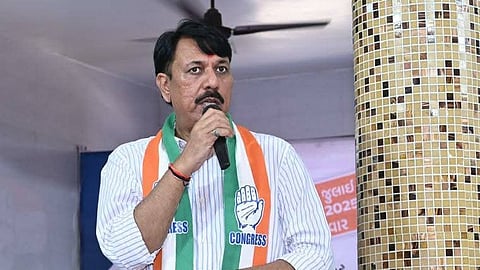

AHMEDABAD: The Gujarat Congress’ internal rift has deepened with a fresh power struggle in Banaskantha as the State Chief Amit Chavda cancelled a district organisational list announced by the District President Gulabsinh Rajput, citing the lack of approval from the Gujarat Congress Committee.
The development comes just days after Rajya Sabha MP Randeep Surjewala was appointed Gujarat Congress in-charge.
Rajput’s list included appointments to key positions such as vice-president, president, general secretary, secretary, treasurer, spokesperson, office secretary and members of the district executive committee.
The appointments of the office-bearers and executive committee members were subsequently revoked.
The cancellation has brought the dispute between the state and district leadership into the public domain. Following Chavda’s decision, Rajput took a sharp swipe at senior Gujarat Congress office-bearers in a social media post.
Without directly naming anyone, Rajput questioned the party’s priorities. He urged the leadership to focus on the BJP government instead of fighting within the organisation.
“Your fight should not be with us. Your fight should be against the BJP government on people’s issues and matters of public interest,” Rajput wrote on X.
Rajput’s remarks highlight the growing tension over organisational control and political priorities.
The dispute carries added political weight because Banaskantha was the only constituency among Gujarat’s 26 Lok Sabha seats where Congress won with a female candidate in the 2024 general elections.
The district therefore holds both symbolic and strategic importance for the party as it seeks to strengthen its presence in the state.
Instead of projecting unity, the latest clash has exposed divisions over appointments and decision-making authority.
With Surjewala now tasked with overseeing Gujarat Congress and the party preparing for the the 2027 Assembly election and 2029 Lok Sabha election, the Banaskantha episode presents an early test of the new leadership’s ability to contain internal dissent.
