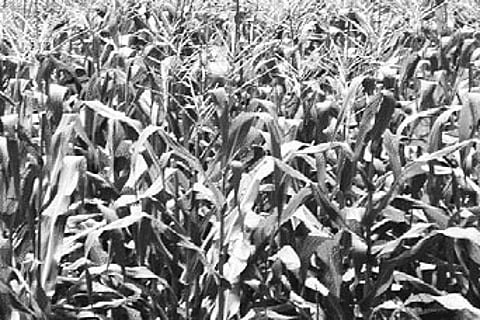

If one is curious to learn of the evolution of fodder grass which began from the elephant grass in the African savannas to the present- day hybrid varieties of Co-3 and Co-4 Samporna, one should visit Mymul Training Centre at Alanahalli.
Mysore Milk Union Limited (Mymul) has been growing 20 varieties of fodder grass in a one acre plot for over three decades.
The plot is also an educative centre for thousands of farmers, especially those planning to take up dairy farming.
Of the varieties of fodder grown here, the fodder which originated from the Elephant Grass and Kumbu (Bajra) can also be seen. After extensive research, Hybrid Napier (NB-21), a cross between the Elephant Grass and Bajra was developed.
Further research at the Tamil Nadu Agricultural University in Coimbatore resulted in the development of Cumbu Napier CO 1 followed by CO 3 and CO 4, known as Samporna. These three hybrid varieties can be seen here.
Using CO 4 as fodder for cows resulted in increase in milk output, and the yield per hectare is more.
The Mysore-Chamarajanagar Milk Union is the third largest in the state in terms of milk output and on an average 6 lakh litres is produced daily. There is also a good demand for the fodder.
Mymul has already provided more than 1 crore stem cuttings of this hybrid grass to farmers at subsidised rates and has been able to meet more than 80 per cent of the demand. Free home delivery is also provided.
M S Lakshmi Prasad Yadav of Mymul said that farmers in Mysore and Chamarajnagar are growing this fodder and thousands have undergone training on growing hybrid grass varieties.
The proteins in fodder helps livestock produce more milk, said farmer Thimmanayaka.