
BENGALURU: The Indian Space Research Organisation (ISRO) on Saturday announced the launch of Himalayan Outpost for Planetary Exploration (HOPE) analog mission in Tso Kar Valley, Ladakh.
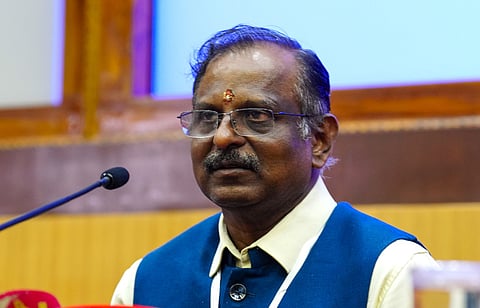
The ten-day long mission, from August 1-10, 2025, is more than a simulation, it a rehearsal for the future, said V Narayanan, ISRO Chairman at the sidelines of the inauguration.
He said this high-altitude mission is being done at a 4,530 metres elevation. The location (The Tso Kar valley) is Earth’s most Mars-like environment and the HOPE is designed to simulate planetary conditions for testing human physiological responses, validating mission protocols and evaluating spaceflight technologies. The mission marks a significant milestone in India’s preparations for future human spaceflight to Low Earth Orbit and Moon and Mars exploration missions, he added.
Explaining why Ladakh was chosen by ISRO scientists the mission, ISRO scientists explained that it is a dry desert like cold area, where oxygen supply is less. The striking environment of the Tso Kar valley parallels with early Mars, due to high UV flux, low air pressure, cold extremes and saline permafrost, the scientist explained.
This mission has listed out experiments to test various aspects including the starvation of oxygen, radiation, isolation, physical, psychological and mental endurance and how the scientists body will respond to various circumstances. “In space the astronauts need external support, these extra- terrestrial tests undertaken in specially created environments will only strengthen their endurance,” explained a ISRO scientist.
Along with industry partners, ISRO has also partnered with IIST and RGCB, Trivandrum, IIT Hyderabad, IIT Bombay and the Institute for Aerospace Medicine, Bengaluru. These institutes will examine epigenetic, genomic, physiological and psychological responses of two analog mission crew members, ISRO team said.
Earlier, the Human Space Flight Centre of ISRO lead a team on the Ladakh Human Analog Mission in November 2024 and the ten-day long isolation study called Anugami involving Gaganyatris in July 2025. The data obtained from these missions will help in designing the protocols and infrastructure for the upcoming human exploration missions that ISRO is working on. They will provide the needed insights into technology performance, crew workflow and environmental adaptation.
