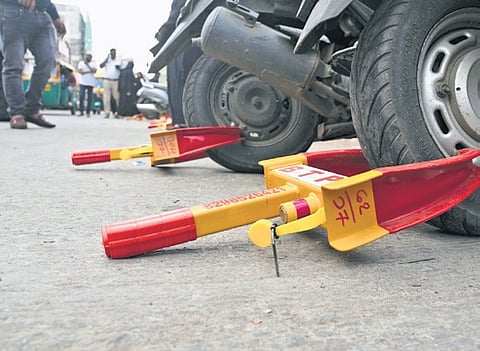

BENGALURU: The Karnataka government’s recent decision to offer a 50% discount on traffic e-challan fines has sparked a debate. While one section has hailed the move, a few opine that the government is making roads unsafe by offering such a rebate. Experts feel that the government is sending out a message to violators to “wait for discounts” instead of implementing strict measures to ensure road safety. This is not the first time that the State Government is offering such a discount. In 2023, the government had announced such concessions on two occasions.
Speaking to TNIE, traffic expert Prof MN Shreehari said the 50% rebate is a “wrong signal” from the government. “Instead of collecting fines, the government is giving offers to violators, which is unlawful. The law clearly states that anyone who violates the law should be penalised, not offered discounts. Such measures will only encourage more violations and reduce the fear of law and rules. Instead of offering discounts, the government should focus on educating violators about road safety,” he said, adding that by offering a blanket discount, the government risks diluting the deterrent effect of fines, which are meant to discourage reckless driving and ensure road safety. “Motorists may assume that penalties can always be negotiated later, encouraging repeated violations. Meanwhile, others who paid their fines promptly at full rates may feel penalised for their compliance,” he said.
A senior traffic police officer told TNIE that while the move may not be good in the long run, it does help many citizens, especially those struggling with accumulated fines, by providing financial relief. “Traffic rules must be followed for one’s own safety. With such offers, many delivery personnel, auto-rickshaw drivers, and cab drivers-who are often in a hurry for work-are among the most frequent violators. They break rules, pay only 50% of the fine, and then repeat the offence. These violations sometimes lead to injuries and fatalities for other road users and pedestrians. Violations such as signal jumping, riding without helmets, or driving without seat belts are not minor lapses but serious safety risks. People may view them simply as traffic violations, but in reality, they are essential safety measures that protect lives,” he said.
Another officer said that the government must ensure this remains a one-time measure to recover dues, not a recurring practice. “Otherwise, the message to motorists may shift from ‘follow the rules’ to ‘wait for the next discount’,” the officer said. While the scheme serves as a short-term revenue boost and helps reduce administrative backlog, its long-term impact on traffic behaviour is questionable. If such concessions become frequent, they may normalise violations rather than curb them,” he said.
