
The weather during 2025 in Karnataka was characterised by high rainfall variability and frequent extreme events, marked by excessive pre-monsoon rainfall, normal Southwest monsoon, and deficit post-monsoon rain. Overall, the cumulative rainfall in the state up to December 23 stood at 1,319mm, against a normal of 1,152mm, recording a positive deviation of 15 per cent.
Region-wise, rainfall remained above normal across all agro-climatic zones: South Interior Karnataka (SIK) received 741mm against 712mm (+4%), North Interior Karnataka (NIK) recorded 848mm against 700mm (+21%), Malnad received 2,129mm against 1,947mm (+9%), while the Coastal region experienced 4,184mm against 3,517mm (+19%).
The pre-monsoon period (March-May) witnessed exceptionally high rainfall, with the state recording 286mm against a normal of 115mm (+149%). This unusually high rainfall significantly augmented groundwater recharge and led to substantial inflows into reservoirs, resulting in early filling of major dams by May itself. The coastal region recorded an extraordinary 707mm against a normal of 156mm (+354%) during this period.
The Southwest monsoon season (June-September) remained largely normal, with 882mm against a normal of 852mm (+4%). While NIK (+21%) and the coastal region (+3%) received above-normal rainfall, SIK (-9%) and Malnad (-7%) experienced marginal deficits. The northeast monsoon (October-December), up to December 23, was below normal, with the state receiving 149mm against 181mm (-17%), and pronounced deficits in NIK (-32%) and SIK (-12%).
The month-wise rainfall distribution reflected sharp contrasts, with distinctly wet (April, May, July, September and October) and dry (June, August, November and December) months, indicating an erratic and uneven monsoon pattern that significantly influenced agricultural operations across the state.
The favourable pre-monsoon micro-climate supported greengram cultivation in northern Karnataka, resulting in higher productivity.
However, early kharif cotton and tur in the same region were adversely affected by waterlogging, leading to poor germination and establishment and a yield decline of 25-30 per cent.
Rainfed kharif crops such as maize, ragi and pulses in central and southern Karnataka, though exposed to erratic rainfall, benefited from adequate residual soil moisture during dry spells, which supported crop water requirements and stabilised yields. The relatively dry conditions during November and December further facilitated crop maturity and harvesting. As a result, yield improvements of 10-15 per cent are expected in these crops.
Despite deficit rainfall during the rabi season, crops in northern Karnataka benefited from residual soil moisture and improved groundwater levels. The drop in temperature during December proved favourable for flowering and pod development in Bengal gram. Overall, the rabi cropped area increased marginally, and productivity is expected to improve, leading to higher rabi production in the state.
Among commercial crops, sugarcane benefited from higher rainfall, resulting in a 10-15 per cent yield increase. However, lower temperatures during later months induced flowering, which may adversely affect sugar recovery. In the hilly regions, the combination of good pre-monsoon and monsoon showers provided an ideal environment for coffee, with production expected to increase by up to 20 per cent.
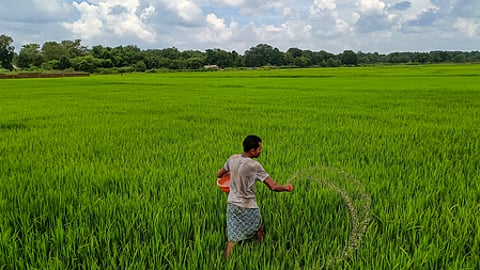
The rice crop in the Krishna and Cauvery command areas benefited significantly from early reservoir filling and timely canal water releases. Early sowing, continuous water supply during crop growth, and drier conditions during maturity and harvest collectively contributed to improved yields, raising prospects of a bumper kharif rice harvest.
The 2025 weather scenario in Karnataka highlights a growing asymmetry between kharif and rabi seasons under increasing climate variability. While excess and erratic rainfall posed challenges during early kharif, improved soil moisture and favourable late-season conditions helped stabilise overall production. Strengthening climate-resilient farming practices, water management, and weather-based advisories will be crucial to sustaining agricultural productivity in the years ahead.