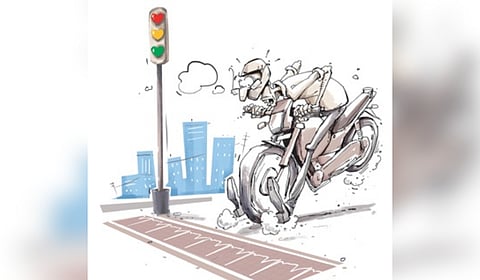

BENGALURU: Psychotechnical and psychometric testing have been often proposed as tools to improve road safety. However, mental health experts caution that while such assessments can evaluate certain abilities, they are not a comprehensive solution to unsafe driving.
Dr Vyjayanthi NV, Consultant Psychiatrist at Ramaiah Memorial Hospital, explains that psychotechnical tests can measure coordination, visual range, attention and reaction time, all essential for safe driving. These tools may help determine whether a licensed driver has the cognitive and motor skills required to be on the road.
Yet, she stresses that such tests occur in controlled environments and cannot account for real-world variables. Stress, peer pressure, intoxication, fatigue, or emotional distress can impair judgment even in individuals who perform well in testing conditions. People tend to behave more cautiously during assessments than in everyday situations, limiting the predictive value of these tests.
From a developmental perspective, adolescence itself presents unique risks. The frontal cortex responsible for impulse control and risk assessment continues to mature into early adulthood. Teenagers, therefore, often underestimate danger and overestimate their ability to handle risky situations. This developmental reality underpins legal age restrictions for driving; when minors bypass these safeguards, they operate vehicles before their cognitive maturity supports safe decision-making.
Counselling psychologist Ann Treesa Rafi further cautions against attributing accidents to individual psychological traits alone. Psychometric tests can assess personality patterns, mood disorders or behavioural tendencies, but they cannot capture the complex social environment influencing adolescents. Family dynamics, peer norms, media exposure, school culture and policy enforcement all shape behaviour on the road.
“It would be erroneous to assume accidents occur because of a single psychological trait,” she emphasised. While screening may identify a small percentage of high-risk individuals, such as those with severe antisocial tendencies, it cannot prevent a majority of incidents. At best, such testing can complement broader preventive measures rather than replace them.
Parental responsibility and power of modelling
While testing has limitations, experts agree that family environments play a crucial role in shaping young people’s attitudes toward road safety. Psychologists emphasise that adolescents learn road behaviour primarily through observation and social influence, rather than formal instruction.
Counselling psychologist Shayna Sunu highlights that young people internalise what they see adults doing on the road. When parents ignore signals, skip helmets, or treat speed limits casually, these behaviours become normalised. “We learn from our parents, how they drive shapes how we drive,” she noted, adding that responsible model behaviour is one of the most effective preventive tools. Wearing helmets and seatbelts, using indicators, and respecting traffic rules communicate that safety is non-negotiable.
Rafi adds that explaining why safety measures matter is equally important. Many teenagers wear helmets only to avoid fines, not because they understand the life-saving protection they provide. When adolescents recognise that traffic laws exist to protect lives, their own and others’, compliance becomes rooted in responsibility rather than fear.
Both experts caution against control-heavy parenting approaches. Strict rules imposed without dialogue may push risky behaviour underground, with teenagers hiding actions such as taking out vehicles without permission. In contrast, open communication enables parents to discuss consequences, set expectations, and guide safer decision-making. Creating an environment where adolescents feel safe to share their choices allows parents to intervene before risks escalate.
Rafi says parents should avoid assuming sole blame when accidents occur. Adolescents are shaped by multiple influences like peers who glorify speed, media portrayals of stunts, school environments, and broader societal attitudes toward road safety. Holding parents entirely responsible ignores these systemic factors and oversimplifies a complex issue.
At the same time, both psychologists agree that parents remain a powerful protective factor. Building trust, discussing legal age restrictions, monitoring access to vehicles, and encouraging safer outlets for thrill-seeking, such as sports or creative pursuits, can significantly reduce risky behaviour. These measures do not eliminate experimentation, a normal part of adolescence, but they foster accountability and informed decision-making.
Ultimately, accidents involving minors reflect a larger ecosystem rather than isolated failures. Psychotechnical tests may offer limited insights, but meaningful prevention requires coordinated efforts, responsible modelling by adults, open family communication, school-based awareness, consistent law enforcement, and a cultural shift that values safety over speed.
