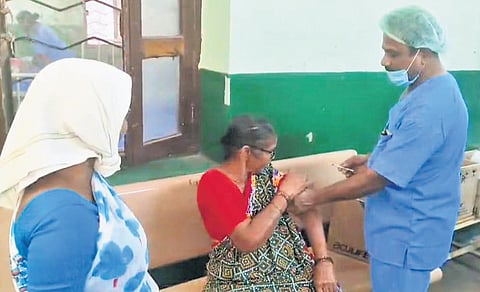

BENGALURU: The Karnataka government on Friday launched two major public health initiatives- the State Action Plan for Rabies Elimination (SAPRE) and the State Action Plan for Prevention and Control of Snakebite Envenoming (SAPSE).
These are aimed at preventing avoidable deaths and strengthening emergency care across Karnataka. It also aligns with national goals and adopts a One Health strategy involving multiple departments and community participation.
Under SAPRE, the State has reaffirmed its commitment to eliminate dog-mediated human rabies by 2030. Rabies, will be monitored through strengthened surveillance and reporting systems. Free anti-rabies vaccines (ARV) and rabies immunoglobulin (RIG) are being provided at all government health facilities. Private hospitals are directed to maintain adequate stocks and provide immediate treatment without insisting on advance payment. State and district-level steering committees are formed to ensure coordination.
The “Rabies-Free Cities Initiative” will be implemented in 11 major urban centres. City task force will focus on mass dog vaccinations, dog population management, waste control, and public awareness. Schools will integrate rabies prevention into health programmes. Veterinary and urban bodies will lead vaccination drives and stray dog management.
Complementing this, SAPSE targets a significant reduction in snakebite-related deaths and disabilities by 2030. Snakebite cases declared notifiable in Karnataka, must be reported to improve response and surveillance.
The Health Department has ensured adequate stocks of anti-snake venom, identified treatment centres, and mandated life-saving treatment without advance payment.
The snakebite plan emphasises community awareness, early transport to health facilities, prompt anti-snake venom administration, and rehabilitation. Departments including Panchayat Raj, Forest, Education, Labour, and Police are assigned for rural awareness, school curriculum updates, workplace safety, and curbing snake trafficking.
The government urged citizens to seek immediate medical care for animal bites and snakebites, complete prescribed treatments, and support awareness efforts to achieve a rabies-free and snakebite-resilient Karnataka by 2030.
KARNATAKA EXPANDS ABARK SCHEME TO FULLY SUPPORT RARE DISEASE PATIENTS
Bengaluru: The state government issued an order to provide full financial coverage for treatment of secondary complications in rare disease patients from non-priority household (NPHH) families under the ABArK scheme, on a pilot basis.
The decision aligns with the National Policy for Rare Diseases (NPRD), 2021, and aims to reduce the financial burden on families managing long-term complications of rare diseases. The benefit will apply to patients registered at the Indira Gandhi Institute of Child Health, Bengaluru, while priority household (PHH) beneficiaries will continue to receive support as per existing guidelines.
The pilot programme will be implemented by the Suvarna Arogya Suraksha Trust with an overall financial ceiling of Rs 1 crore. The trust has been directed to monitor the implementation and submit a report on outcomes before the funds are exhausted, to help the government decide on extending the scheme.