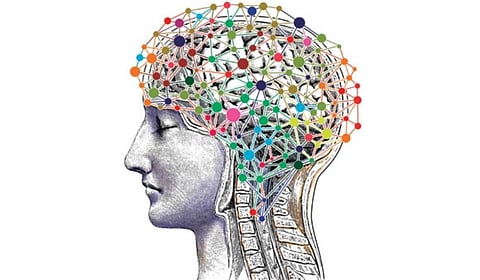

BENGALURU: Psychiatric disorders are increasingly conceptualised within a neuro-developmental framework, in which genetic liability interacts with environmental exposures across the lifespan to shape brain and behavioural trajectories.
In a first-of-its-kind study in India, an Indian Council of Medical Research (ICMR)-led study is aiming to look at the growth and development of the human brain from the fetal stage onwards to characterise risk and resilience factors for long-term mental health. The Pathways to Resilience And Mental Health (PARAM) - an ICMR task-force study coordinated by the National Institute of Mental Health and Neurosciences (Nimhans) as a nodal centre with seven additional recruitment sites across India is under way to understand deviations in these trajectories that may confer vulnerability or resilience to later psychopathology.
“In the ongoing study, we are looking at risk and resilience factors that affect mental health outcomes,” said Associate Professor of Psychiatry, Nimhans, Dr Bharath Holla. He and Dr Eesha Sharma, associate professor, Department of Child and Adolescent Psychiatry, Nimhans are principal investigators (PIs) along with other researchers. “We are taking a step back to look at normative processes in the brain, the trajectories, the factors that influence these trajectories from the prenatal period into early adulthood within diverse socio-ecological contexts,” said Holla.
“In terms of understanding how mental health or mental illness emerge, this study is a tremendous endeavour to characterise young people from the time of their birth on the multi-level ecologies that they inhabit. This will help us understand how mental illnesses emerge through the interactions of various determinants,” said Sharma.
She added that a lot of previous efforts have “studied individuals during their lifetime, but we know that risks for mental illness are determined from conception and intrauterine life.
During this time, mother’s mental health and nutrition affect foetus growth and development,” said the psychiatrist. The PARAM project -- the first of its kind study in India -- aims to generate neuro-developmental trajectories and identify pathways to risk and resilience for mental health across the life course in India.
The specific objectives are: to chart neuro-developmental trajectories of brain, cognition, behaviour and mental health across prenatal, childhood, adolescence, and early adulthood; to examine the impact of early-life exposures (maternal stress, nutrition, inflammation, toxins, digital media, and socio-environmental adversity) on developmental trajectories, with a focus on sensitive and critical periods; to integrate genetic and environmental data using G×E (Genotype-by-Environment) models and normative modelling approaches, deriving individual-level deviation scores that support subject-specific inference; to identify risk and protective factors for the onset and course of psychiatric symptoms, including biological markers, neuroimaging indices, neurocognitive functions, and psychosocial determinants; to build open, harmonised infrastructure for multimodal data (phenotypic, imaging, biospecimen, geospatial), enabling reproducibility, data sharing, and participation in global consortia.
“PARAM is an observational, multi-site cohort spanning the antenatal period to 30 years, implemented as two coordinated components to maximise developmental coverage while limiting respondent burden,” said Holla and Sharma.
Besides Nimhans, the seven additional recruitment sites across India are Rishi Valley Rural Health Centre, Chittoor, Andhra Pradesh; Postgraduate Institute of Medical Education and Research (PGIMER), Chandigarh; Regional Institute of Medical Sciences (RIMS), Imphal, Manipur; ICMR–Centre for Ageing and Mental Health (ICMR-CAMH), Kolkata; Pt Jawahar Lal Nehru Memorial Medical College (JNMMC), Raipur; All India Institute of Medical Sciences, Kalyani (AIIMS-K), West Bengal; and All India Institute of Medical Sciences, Jodhpur (AIIMS-J).
The study has representation spanning North, South, West, East and North-East regions of India, capturing heterogeneous socio-cultural contexts and exposure profiles (urban density, informal settlements, mining-adjacent areas, and regions with socio-political stressors).
Three other sites that are providing technical support for data acquisition and management are the NIMHANS Database and Biorepository (Database), Centre for Development of Advanced Computing, Bengaluru (C-DAC) and International Institute of Information Technology, Bengaluru (IIIT-B).
