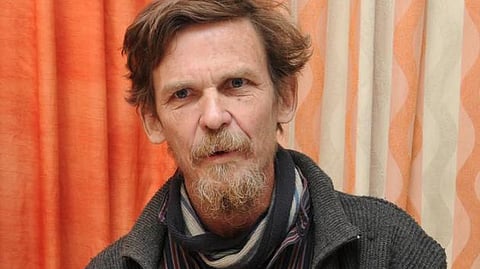

BENGALURU: Delayed wage payments, technological glitches and declining worker participation are threatening the functioning of the Mahatma Gandhi National Rural Employment Guarantee Act (MGNREGA), according to Jean Drèze, a welfare economist and activist who has worked extensively on the rural employment guarantee programme.
Speaking at a discussion titled “MGNREGA vs VB-G RAM G: Harsh Realities”, Drèze called for urgent reforms to revive the rural jobs programme as it completes two decades. He noted that the landmark law, enacted in 2005 after years of grassroots mobilisation, was envisioned as a cornerstone of India’s social security architecture.
“The Act has some teeth precisely because it went through this process and because social movements were actively involved,” he said, adding that when governments draft such laws on their own, they “tend to reduce their obligations to the minimum and maximise their powers.”
Drèze recalled that the programme once produced significant results. “Around 2012, about 50 million households were getting some work under the Act,” generating nearly “2.2 billion person-days of labour,” with “about half of the workers being women” and nearly 40% belonging to Scheduled Caste and Scheduled Tribe communities.
All this, he noted, came “at the cost of half of one percent of the country’s GDP,” making it a major achievement globally.
At the village level, the programme helped create assets and support rural livelihoods. However, he said the scheme has faced growing challenges over the past decade, particularly due to persistent wage payment delays linked to frequent changes in the payment system.
These changes have resulted in “delayed payments, rejected payments, diverted payments, blocked payments and non-payments,” often caused by technical issues such as failed KYC verification.
“They kept changing the payment system. It started with cash, then post offices, then banks, and later electronic systems,” he said. “Each time we change the system, there are delays for months, sometimes even years.”
He added that low wages have also reduced interest among workers, along with uncertainty about whether they will be paid. Real wages, he noted, have remained largely stagnant since 2009 as revisions are linked only to inflation.
These problems, combined with uncertainty about payments, have also created conditions for corruption. Drèze said the lack of reliable payments discourages honest participation by workers and weakens monitoring mechanisms on the ground.
Another major concern is underfunding. Insufficient budget allocations, he argued, create a cycle in which fewer jobs are generated, worker participation declines and irregularities increase.
Addressing corruption alone, he warned, will not resolve the crisis without fixing structural issues such as delayed wage payments and inadequate funding.
Drèze also noted that the “employment guarantee law” must be understood in the context of widespread people’s movements between 2003 and 2005. The programme emerged as part of a broader wave of rights-based legislation during that period, alongside the Right to Information Act 2005 and the National Food Security Act 2013, which together aimed to strengthen social protection.
“The country is not a poor country but a country of poor people,” he said, emphasising the need for such welfare programmes.
However, implementation has varied across states. Kerala, Tamil Nadu, Andhra Pradesh, Telangana, Himachal Pradesh and Chhattisgarh have reportedly implemented the programme effectively, while several other states have struggled.
He also raised concerns about increasing centralisation in the administration of the Viksit Bharat—Guarantee for Rozgar and Ajeevika Mission (Gramin) (VB-G RAM G).
Changes in financial arrangements now involve a 60:40 cost-sharing formula between the Centre and the states, with states bearing additional costs if spending exceeds the Centre’s allocated budget.
According to Drèze, this arrangement reduces the Centre’s financial responsibility while retaining significant control over budgets, technologies and implementation rules.
Certain provisions, such as the central government’s authority to determine where the employment guarantee applies, seasonal restrictions on work, and the integration of MGNREGA labour into other centrally sponsored schemes, could potentially limit the scope of the guarantee.
“In 20 years, not a single worker has gone to court to claim their rights,” he said, noting that legal remedies remain largely inaccessible to rural labourers. Instead, he stressed that “it is public pressure that moves the state.”
Despite its challenges, Drèze said MGNREGA remains one of the world’s largest public employment programmes and has inspired debates on employment guarantees in countries across Europe, the United States and South Africa. “We should recognise that a programme of this scale is possible,” he added.
Reviving the programme, he said, will require addressing multiple issues simultaneously, including underfunding, payment delays and governance challenges.
“You cannot eliminate corruption if you don’t fix wage payments and funding problems,” Drèze said. “We have to see the crisis as a whole and try to find a way out of it.”
