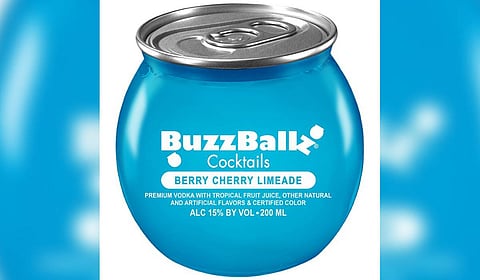

BENGALURU: Taking a serious note of the news circulating on social media platforms about the sale of a beverage called BuzzBallz near schools and colleges and its rising popularity among students, the Karnataka State Commission for Protection of Child Rights (KSCPCR) has taken suo motu cognisance of these reports and written a letter to the Karnataka State Drugs Control (KSDC) Department.
KSCPCR has asked the KSDC to test the drink in their laboratory and verify the alcohol level. In case it is found harmful, then steps must be taken to restrict it. The commission has asked KSDC to submit a report within five days.
In this letter, the commission was concerned that the drink marketed in a juice-like form contains nearly 15% alcohol along with high sugar levels. The drink is prepared with vodka, tropical fruit juice, other natural and artificial flavours and certified colours.
The beverage offers a wide variety of flavours, which is gaining popularity among youngsters. Such a combination poses a risk to the health (physical and mental) of children, mainly leading to addiction without awareness. They have also raised an alarm over its easy availability in localities where there is a movement of more students.
KSCPCR interim Chairperson, Shashidhar Kosambe, stated that such beverages with high alcohol levels should not be sold, especially near educational institutions.
In an official statement, BuzzBallz said, “BuzzBallz is an aromatized wine-based alcoholic beverage that fully complies with all applicable Food Safety and Standards Authority of India (FSSAI) regulations. It has been duly certified by the relevant authorities as fit for consumption and has never been marketed as a soft drink.
The product is distributed and sold exclusively through licensed alcohol retail outlets authorized to sell alcoholic beverages and is intended strictly for individuals of legal drinking age (LDA). BuzzBallz supports and promotes responsible drinking practices and does not encourage excessive or irresponsible consumption. All promotions have been, and will continue to be, compliant with relevant laws and regulations.”
