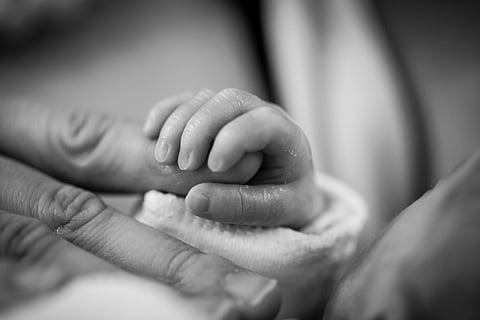

THIRUVANANTHAPURAM: Marking a concerning finding in the state's health trend, the Assembly Estimates Committee has come out with a report pointing at an increase in newborn infants with genetic deformities.
As per the report, Thiruvananthapuram is leading in the number of newborn children with genetic defects. The report, which compiled the data from the Newborn Screening Program from 2021 to 2023, found that the capital city is followed by Kollam and Malappuram in the number of cases. The committee, chaired by former health minister KK Shailaja, also identified that the number of children with genetic disorders are increasing in the state.
The number of newborns reported with genetic defects was 2,635 in 2021, which rose to 3,232 in 2022 and 4,779 in 2023. The figures of Thiruvananthapuram district increased from 379 in 2021 to 1,237 in 2023, a jump of 226%. The 2024 figures from the 13 government medical colleges of the state, under the 'Shalabham' scheme, also revealed that 61% of the cases identified in the state (1745 out of 2846) were from the capital.
However, the committee observed that the total number of children screened in each district had not been received, and only after that can a conclusive analysis be stated.
Another key finding of the committee was that the amount of funds utilised for the scheme was decreasing with every passing year. While 41.52% of the funds remained underutilized in 2021, the share rose to 73.14% in 2023, for which the committee has sought an explanation.
Commenting on the report, genomics expert Dr Vinod Scaria said that there is nothing about the figures. "Generally, the percentage of people with genetic disorders will be the constant in a population," he said. Adding that most of these diseases have either of the child's parents as carriers, there is nothing to panic about the general increasing trend. “If the number of tests increasing we can surely say that this is a positive sign, as people are testing for these more, and a higher number suggests many more children with treatable conditions are being identified in newborn screening," he stated.