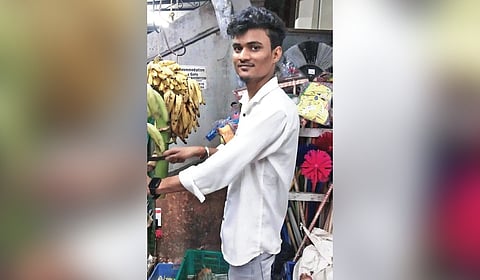

KOCHI: “I’m travelling to attend my brother-in-law’s wedding, and to vote,” says Dipesh Kumar, as he arranges packets of milk in a small grocery store near the Cochin University of Science and Technology (Cusat) in Kalamassery. For the 35-year-old from Khagaria district of Bihar, who has lived in Kerala for the last 12 years, the journey home next week will serve a double purpose.
He and three family members will take the train early next month — a trip that will coincide with both the wedding on November 24 and the two-phase Bihar assembly election on November 6 and 11. “I don’t follow politics very closely these days, but when I go home, I make sure to vote,” says Dipesh, who has worked at the store for 10 years.
His brother-in-law, Hardeb Kumar, who works with him at the shop, chips in: “The Jan Suraaj Party [of Prashant Kishor] will take votes away from both the NDA and the Mahagathbandhan.”
For thousands like Dipesh and Hardeb, such trips are an annual ritual — made more compelling this year by the twin pull of Chhath Puja and the election. The four-day Chhath festivities, which ended on October 28, saw one of the largest seasonal migrations in the country, with millions of Biharis returning home.
“Those who go home for Chhath Puja usually return only after one or two months. Sometimes, even major infrastructure projects in Kerala slow down because Bihari workers travel home during this period,” says Benoy Peter, executive director of the Centre for Migration and Inclusive Development (CMID).

Though workers from Bihar make up only about 7% of Kerala’s four-million-strong migrant population, they are concentrated in key sectors — construction, footwear, iron and steel, and ship welding. There are large clusters of Bihari workers in industrial pockets such as Binanipuram, near Kochi, and the footwear belt of Kozhikode.
A study by CMID pegged the price of democracy that these migrant workers pay at nearly Rs 2,600 crore: the cumulative loss to 40 lakh Bihari migrants across India who travel home for the elections, factoring in 15 days of lost wages at Rs 400 a day and an average travel cost of Rs 600 per person.
Political participation among migrant Muslims from Bihar is often driven by social and bureaucratic pressures, Benoy points out. “In the wake of the Special Intensive Revision (SIR) of electoral rolls, Muslims are compelled to travel home to prove their existence and identity,” he explains. “Sometimes, community leaders or local candidates also issue special summons urging people to return and vote.”
The same applies to Hindu workers, though to a lesser extent, if there’s political mobilisation in their constituencies.
For Dipesh, however, the motivation is family and duty. “We’re going mainly for the wedding,” he says, pausing before adding with quiet pride, “But we’ll also make sure to vote. After all, it’s our right.”
When the ballot boxes are opened in Bihar on November 14, the echoes will be heard far away in Kerala, too, in the silent construction yards and shuttered shops left behind by those who went home to be counted.