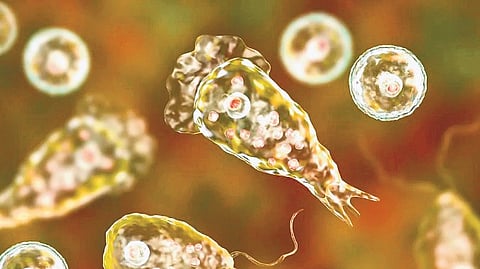

KOZHIKODE: The number of amoebic meningoencephalitis cases reported in Kerala has risen to 11, with a 10-year-old boy from Malappuram confirmed to be infected on Thursday. The child is currently undergoing treatment at Kozhikode Government Medical College Hospital (MCH), health authorities said.
According to hospital sources, the boy was admitted with fever and neurological symptoms, and further laboratory tests confirmed the presence of Naegleria fowleri, the rare brain-eating amoeba responsible for the condition. The disease, though extremely uncommon, is often fatal.
District Medical Officer (DMO) Dr R Rajaram confirmed the case and emphasised the seriousness of the situation. “Amoebic meningoencephalitis is a very rare infection but its outcomes are usually severe. We are closely monitoring all suspected cases and ensuring that patients receive the best available treatment at KMCH,” he said.
So far, three deaths have been reported in connection with the outbreak. On August 16, Anaya, a nine-year-old girl from Annappara near Thamarassery, became the first victim after initially being admitted with fever and repeated vomiting. Her younger brother, aged seven, also tested positive and is still under treatment.
Later, on August 30, a three-month-old infant, Mohammed Ahil, succumbed to the infection at MCH. Two other patients remain on ventilator support, hospital sources said, while the rest continue to undergo intensive treatment.
Dr Rajaram urged the public to remain cautious, particularly with children. “The infection is believed to spread when contaminated water enters the body through the nose, especially while bathing or swimming. We advise people to avoid stagnant or untreated water sources and to maintain strict personal hygiene,” he cautioned.
