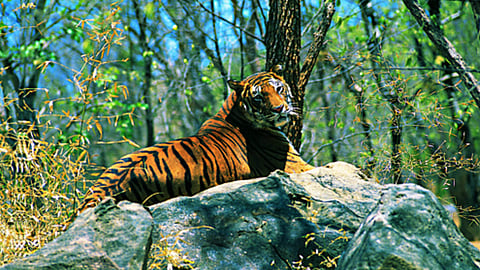

THIRUVANANTHAPURAM: In a politically significant move ahead of the upcoming elections, the state cabinet on Saturday approved a draft bill empowering the chief wildlife warden to order the immediate killing of any wild animal that enters residential areas and injures a person.
The draft legislation, Wildlife Protection (Amendment) Bill 2025, will be introduced as an amendment to the Wildlife Protection Act 1972, and it is aimed at mitigating incidents of human-wildlife conflict. It’s the first time a state government is bringing in an amendment to a central legislation.
Forest Minister A K Saseendran said the bill’s provisions will eliminate the cumbersome and time-consuming procedures mandated by existing central laws and Standard Operating Procedures (SOPs) issued by the Union government. “This will enable swift action in emergencies without compromising efforts to protect endangered species,” the minister said.
The draft bill is expected to be scheduled for debate in the state assembly session starting on Monday.
According to the draft bill, when a person suffers serious injury from a wild animal attack, the district collector or chief forest conservator can report the incident to the chief wildlife warden. The CWW will then have the authority to take immediate action, including killing the animal, without being bogged down by procedural delays. The draft bill further allows for population control measures such as birth control and relocation of Schedule-II wild animals if their numbers rise uncontrollably.
Forest min: Bill will remove impractical legal barriers
Importantly, the state government will no longer require prior approval from the Union government to carry out such measures.
Another major proposal in the legislation will be empowering the state government to declare any Schedule II wild animal as vermin -- a power currently held exclusively by the Union government. Once an animal is declared vermin, it can be killed by any means, and there will be no restriction on the consumption of its meat.
The state government has made many repeated, unsuccessful attempts to have wild boar declared vermin by the Centre. However the Union government has not accepted the demand. Following this, the state government has empowered the chairpersons of local government bodies to serve as honorary wildlife wardens.
The draft legislation also includes a provision to transfer monkeys from Schedule I to Schedule II. Under Section 11(1)(a) of the central Act, before taking action against dangerous wild animals, the chief wildlife warden must ensure that the animal cannot be captured, tranquillised or relocated elsewhere, and the reasons for this decision must be documented in writing. Moreover, any captured wild animal shall not be kept in captivity, or be harmed. Similarly, a wild animal listed in Schedule I may be killed only as last resort, after all other measures have been exhausted.
Minister Saseendran said such impractical key provisions issued by the Centre have hindered the killing of a dangerous wild animal even in an emergency. The state government pointed out that the case of the female tigress ‘Avni’ in Maharashtra remains a prominent example of the challenges posed by these rules. In 2018, the Maharashtra CWW issued a shoot-on-sight order against the tigress, which is believed to have killed 13 people. However, the Nagpur Bench of the Bombay High Court demanded detailed evidence to prove that ‘Avni’ was a man-eater or cannibal. Legal proceedings in the case continue.
“This bill will remove impractical legal barriers, allowing prompt action during emergencies while ensuring the protection of vital wildlife species,” Saseendran said.
