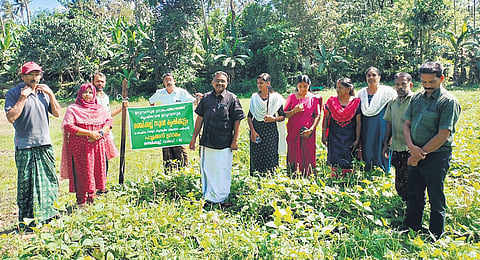

IDUKKI: Can a local panchayat and a Krishi Bhavan together transform the destiny of a village? In Udumbannoor, the answer is a resounding ‘yes.’ For hundreds of farmers in this Idukki village, the devastating floods of 2018 left more than memories of destruction. Pest attacks, altered soil conditions, and nutrient depletion turned farming into a losing battle. Agriculture that once defined Udumbannoor’s identity was fading, forcing many families to abandon their fields and migrate in search of livelihood. That is when the panchayat and the Krishi Bhavan stepped in.
When agriculture officer Ajimon K joined Udumbannoor in 2022, he found farmers struggling to cope with the damaged soil. “The first step was to bring the land back to life. We distributed limestone powder to restore soil pH and followed it up with micronutrients to correct deficiencies. Slowly, the soil began to respond, and with it the farmers’ confidence returned,”
he recalled.Once the ground was rejuvenated, the next challenge was to revive Udumbannoor’s legacy of cultivation. Until 2023, the Krishi Bhavan had been buying vegetables from Horticorp to sell at its Onam stalls. But Ajimon had another idea. “If Udumbannoor is truly an agrarian village, why not grow our own vegetables and sell them back to Horticorp? The thought struck, and the panchayat embraced it wholeheartedly.”
That year, under the People’s Planning Programme, the panchayat launched a unique experiment. Each of the 16 wards was assigned a different vegetable, carefully chosen based on the soil and climate of the locality. Farmers’ collectives were formed, special grama sabhas were convened, and plots having a minimum area of 50 cents were identified in every ward. Soon, barren lands across the panchayat began turning green.

Panchayat president Latheesh still remembers one such transformation. “The one-acre land of the Malayinchi Government School had been lying barren. When our farmers approached the headmaster, he agreed to lease it on one condition – that the vegetables grown there should be used for the school’s midday meals and that the children should also get involved in farming. Today that land has become a thriving vegetable garden, a classroom without walls where students learn the joy of cultivation.”
From Chinese potato in the town ward to cabbages in Uppukunnu, which shares the chill of the Idukki high ranges, each ward’s choice was tailored to its terrain. Along with guidance from the Krishi Bhavan, farmers received subsidies of `22,000 per hectare under the scheme.
The results were remarkable. In 2024, Udumbannoor’s farmers not only supplied vegetables for their own Onam market but also sent 1.5 tonnes of fresh produce to Horticorp, reversing the earlier equation.
This year too, despite relentless rains, the collectives managed to stock the festive market with homegrown produce. “It’s not just about vegetables. It’s about restoring pride in farming, ensuring that genuine farmers receive government benefits, and proving that collective effort can change the fate of a village,” he said.