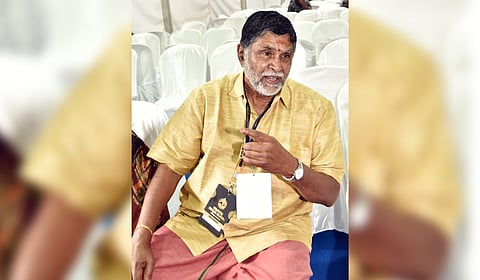

PAMPA : When Balasubrahmanian first made the trek to Sabarimala in 1967, the hill shrine was a world apart from the bustling pilgrimage centre it is today. “There were hardly ten people around,” recalls the Tamil Nadu native, now settled in Canada.
Speaking to TNIE, he said, “I could see the pebbles glistening under the clear waters of the Pampa, and I drank from the river without hesitation. Today, I’m scared to even step into it. It’s slippery, polluted and far from the pristine river I knew it to be.”
Fondly called Balu, he remembers an era when the pilgrimage meant braving wild animals. “Pilgrims spoke in hushed tones about prowling tigers. I once spent the night alone on the bare floor at Pampa, trusting Lord Ayyappa to protect me,” he says.
Life took him to Algeria in 1987, before he moved to Canada, where he now runs a successful South Indian restaurant chain with over 60 employees. Yet, his bond with Sabarimala has only deepened. At the age of 80, he continues to visit the shrine several times a year, keeping a car in Chennai exclusively for the journeys.
In Pampa to attend the Global Ayyappa Sangamam, organised by the Travancore Devaswom Board (TDB) on Saturday, Balu voiced concern about the changing face of the pilgrimage. Cleanliness, he points out, must become a top priority if Sabarimala aspires to be a global spiritual destination.
“Despite the growing number of women, especially elderly devotees, the facilities remain grossly inadequate,” he notes.
Equally troubling for him is the state of the free-meal programme. To address this, Balu plans to donate an idli-making machine worth Rs 20 lakh, capable of producing 5,000 idlis an hour. “It’s not just about quantity,” he stresses.
For Balu, the journey from the days of prowling tigers to ecological degradation is a reminder of how much has changed – and how much must change – for Sabarimala to truly keep pace with its growing importance.
