
KALPETTA: Beyond the bends of the Pathiri forest range, where the Kabini river curves quietly past stretches of paddy, lies Chekadi. Remote, self-sustained and fiercely protective of its roots, the village has long been known as a guardian of Wayanad’s tribal heritage. It is the land of Gandhakashala rice, the fragrant indigenous grain that has carried Chekadi’s name far beyond the hills.
Now, the village has chosen to welcome visitors not with resorts or curated performances, but with its everyday life. Chekadi Nava, a collective formed in 2021 by residents, mostly farmers, began as an effort to market agricultural produce. The initiative has since evolved into something more intimate.
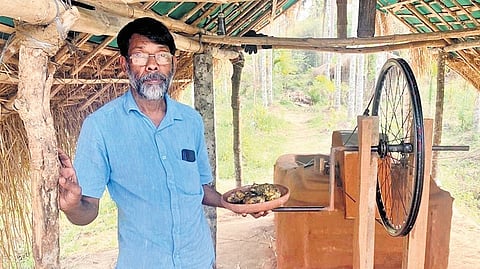
Through Chekadi Nava Tourist Stays, the community is inviting travellers to step into their world and experience Wayanad as it once was, and still is here. “Our journey began with selling our farm products,” said Ajayan Chekadi, coordinator of the initiative. “Today, we are opening our homes. Guests can stay in our mud houses, eat our traditional food and take part in our festivals. What we offer is not a show. It is our life.”
Chekadi is recognised as one of the largest producers of Gandhakashala rice, a variety that cannot be replicated elsewhere. Ajayan believes the same holds true for the village’s culture. “Many remote villages have changed with tourism. What is presented now is not the real Wayanad. Kuzhimandhi and alfaham are not our food traditions. Resorts have brought development, but they have also altered the character of the district. Tourists see dams and hills, but they rarely see how people here live. We want to change that,” he said.

The experience in Chekadi unfolds slowly. Two mud houses stand ready to host guests. In the middle of emerald paddy fields, a simple dining space has been set up where meals are served against the backdrop of open skies and rustling crops. There is no glass wall separating the visitor and the village. The boundaries are meant to dissolve.
The menu reflects the soil. Gandhakashala rice anchors the meal, accompanied by fire-grilled chicken seasoned with local spices, root vegetables harvested from nearby farms and fresh fish from the Kabini. Everything is sourced locally.
Guests are encouraged to walk through the village, meet residents and understand their rhythm of life. Cultural programmes and traditional tribal dances are organised when requested. The idea is not to stage culture, but to let visitors witness it in its natural setting. The arrangements are eco-friendly, and the community is clear that only those willing to respect local customs are welcome.
The initiative has already drawn attention online. A video shared by Siraj, who runs the Instagram page ‘Wayanadan’, has crossed 4.4 million views. “To reach Chekadi, you travel through the Pathiri forest. You may spot wild animals on the way. Then the landscape opens into vast paddy fields and vegetable farms. The air feels different.
The water tastes different. The people remain untouched by urbanisation,” Siraj said. Despite the growing curiosity, Chekadi Nava is careful. The stay is not listed on booking platforms. Visitors usually arrive through personal references.
The residents are aware of the damage unchecked tourism can cause, and they are determined not to repeat those mistakes. With Kuruva Island nearby, Chekadi holds strong potential for heritage tourism. But for this village, the goal is not numbers. It is preservation with dignity.
In a district where tourism often skims the surface, Chekadi offers something deeper. Not an attraction, but an encounter. Not a package, but a passage into the living soul of Wayanad.