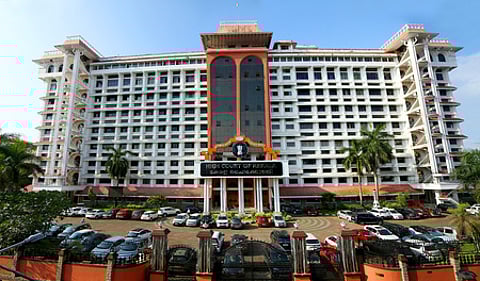

KOCHI: Kerala High Court on Tuesday observed that there is “prima facie, an intrusion of privacy,” in the alleged use of personal data of government employees by the Chief Minister’s Office (CMO) to send bulk WhatsApp and email messages highlighting government achievements.
Justice Bechu Kurian Thomas made the observation while hearing a petition filed by Rasheed Ahammed, Associate Professor at KTM College, Kollam, and Anil Kumar KM, Clerical Assistant, General Administration Department, Thiruvananthapuram. The petitioners alleged that personal data submitted for official purposes was accessed and misused for promotional messaging ahead of the Legislative Assembly elections.
When the matter came up, the court questioned how the Chief Minister accessed the data and what safeguards were in place. “If it is not the Chief Minister, somebody else has accessed the data and sent the messages,” the court observed.
The Government Pleader submitted that the messages were sent through a business account. The court then asked who manages the account and what protection exists if multiple persons have access to individual data. It remarked that the Chief Minister would not be personally handling such a business account.
Senior advocate George Poonthottam, appearing for the petitioners, submitted that members of the judiciary had also received similar messages and that their details are part of SPARK, the government’s employee database. The court responded: “That is a serious allegation. It means the data is being leaked."
The Government Pleader undertook that such messages would not be circulated until the next posting date. The matter has been posted for further hearing on Friday.
The court also orally observed that compelling individuals to receive messages against their will amounts to an invasion of privacy. “Suppose people do not want to receive any messages. The government cannot compel them to read messages they do not want to,” it said.
The petitioners contended that the campaign targeted state employees using mobile numbers furnished for salary credit intimations. They argued that accessing and using such data without consent violates the right to privacy under Article 21 of the Constitution and contravenes the Digital Personal Data Protection Act, 2023.
They maintained that they had never consented to sharing their personal mobile numbers with the CMO and that unauthorised access to such data constitutes a breach of their fundamental right to privacy.