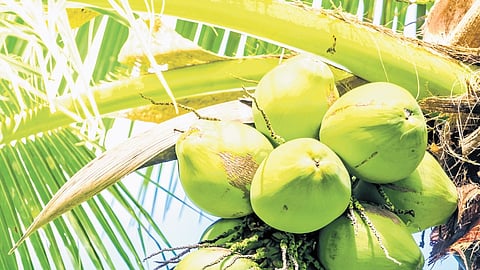

KOCHI: With coconut output inching up over the past couple of months, fears of a possible price drop have gripped farmers in South India. The retail price of coconut, which touched Rs 90 a kilogram in September, has gradually declined to Rs 55-60 in the first week of January. Following a recent field visit, the Coconut Development Board (CDB) concluded that it expects production to rise sharply in the coming months. Growers fear that a spike in output will lead to a price crash.
According to farmers in Kerala, though coconut prices have been declining for the past two months, the Sabarimala season helped avert a crash. Now, with the pilgrimage season set to end by January 20, there is apprehension of prices declining further. However, CDB authorities assure that demand will extend till Sivaratri.
Meanwhile, the demand for coconut in the industrial sector offers a ray of hope. Added to that, export demand for activated carbon, desiccated coconut and coconut milk has been rising, with Europe emerging as a promising market for Indian coconut.
Over the last ten years there has been a notable increase in demand for coconut products throughout Europe. The application of coconut in cosmetics, personal-care products, and even medication has grown beyond its use in food. Coconut oil has become a popular substitute for cooking, baking, and frying oils in European kitchens due to its health advantages and high smoke point. Further, its moisturising properties have made it a much sought-after ingredient in skincare and hair-care products.
According to a study, the European coconut products market is expected to grow $2 billion in value by 2029. This is expected to be driven by increased adoption of plant-based, vegan, or flexitarian diets.

“The rise in demand for coconut products in the European market is encouraging. Coconut milk is being accepted as an alternative to dairy products. Consumers and more concerned about zero-waste, biodegradable and healthy food products. With consumers preferring quality over price, there is demand for Indian coconut products.
Even in the United States, where punitive tariffs pose a challenge to our products, demand for Indian activated carbon has not declined,” a CDB official said. Indian firms exported coconut products worth Rs 3,793 crore in the first seven months of 2025-26 (April to October). Total value for the fiscal year is expected to cross Rs 6,000 crore, which will translate to a 25% rise over the previous year.
In 2024, the heat wave brought on by El Niño combined with drought and other factors to trigger a decline in production in South Asia, which lead to market scarcity. In September 2025, when coconut touched Rs 90/kg, the price of Kerafed coconut oil rose to an all-time high of Rs 529/litre. However, this fell to Rs 434/litre on January 6 as farm output normalised. The price of several popular brands which had crossed Rs 600/lt has also settled to between Rs 350-450.
“Traders were procuring coconut at Rs 65/kg in August, but this eased to Rs 50/kg on January 3. Though prices have declined, we are happy with the returns. Besides, agencies are procuring coconut shell at Rs 30/kg. The current rates are remunerative but with production set to jump in the coming months and there are fears that the price may crash,” said Pandiyode Prabhakaran, a farmer in Palakkad district.
Dismissing such fears, CDB officials said that around 60% of coconut produced in the country is procured by industries, even as demand for Indian value-added products rises in the export market. Though a few firms in Tamil Nadu import copra from Indonesia, it doesn’t affect the Indian market as they have to export the same quantity of products, as per government regulation.
Accepting the decline in coconut prices, Kerafed managing director Saju K Surendran said the procurement rate of copra in the Tamil Nadu market, which stood at Rs 285/kg in September declined to Rs 164 in January. Kerafed does not procure copra in the state. Instead, it procures coconut from Kuttiady in Kozhikode, Cherupuzha in Kannur and Nileshwaram in Kasaragod at Rs 2 above the market price. Kerafed fixes the market price of coconut oil based on the average annual procurement rate.
The PSU recently started marketing coconut oil in 900ml pouches as most competitors have switched to this strategy to lure price-conscious customers. Kerafed markets around 14,000 metric tonnes of coconut oil a year and enjoys only a 4.5% share of the Kerala market, where annual consumption is 3 lakh tonnes.