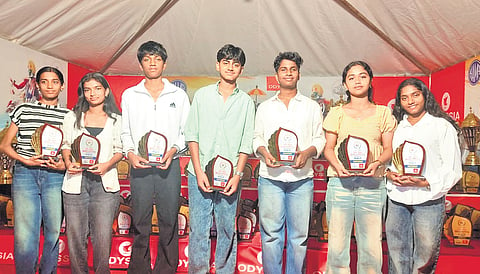

IDUKKI: When a group of students was honoured at the 64th Kerala School Kalolsavam in Thrissur for finishing every grain of food served to them without wasting it, the applause meant something deeper for 15-year-old Habib Sulthan Faizy — a quiet recognition of a habit shaped over years.
A Class 10 student of Vivekananda Vidyasadan School, Adimaly, Habib was one among a group of students selected for the honour.
He was part of a seven-member team from Idukki district that participated in the ‘Vrindavadyam’ competition and secured a B Grade. But beyond the performance arena, it was Habib’s conduct at the food counter that drew special attention.
At the kalolsavam venue, the food committee had introduced a system to encourage good eating habits. As part of this initiative, students who finished their meals without wasting food were identified and rewarded.
Habib was one among those selected for consistently finishing every serving of rice and curry given to him, without wasting even a morsel.
Moved by the gesture, police officers attached to the organising committee honoured him with a medal, praising his respect for food and holding him up as a model for other participants. Similar awards were also given to a few other students who displayed good eating habits during the festival.
For Habib, however, the habit was nothing new. At Vivekananda Vidyasadan School in Adimaly, where he has studied for years, food is not merely consumed — it is respected.
The school has followed a strict zero-food-waste culture for nearly two decades. Students are taught to take only what they can eat, finish every meal, and carry back leftovers, if any.
The discipline dates back to a turning point when the school noticed an unusual rise in stray dogs on campus. An inquiry revealed that discarded lunch waste was attracting them.
Alarmed by the hygiene and environmental implications, the school management decided to eliminate food dumping altogether.
Teachers began sharing lunch with students inside classrooms, reinforcing the practice through example.
Parents were advised to pack only necessary quantities. Slowly, the culture changed — not through punishment, but through understanding.
Today, the three-acre campus stands as a green, plastic-free zone with fruit-bearing trees, chemical-free maintenance and minimal waste generation. Even Haritha Karma Sena workers often leave the campus empty-handed.
Congratulating the student, a senior school official said Habib has made the institution proud.
“This honour is not just his achievement, but the result of a culture we have nurtured for years. When children learn to respect food, they grow up respecting life itself,” he said.
