
In the aftermath of the July 2024 landslide that devastated Mundakkai and Chooralmala, killing over 230 people and destroying more than 2,000 homes, the challenge before the Kerala government was not merely reconstruction.
It was speed.
Speed to restore some sense of normalcy. To rebuild.
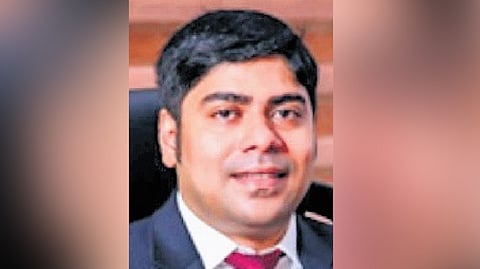
None knew this better than S Suhas, special officer of the Kalpetta Township Project, the state government’s rehabilitation programme to provide permanent housing for the landslide survivors.
However, the conventional procedures within the government were inadequate to accommodate this demand for speed. In fact, if the project were to go by the standard process, it could have stretched into years.
Something had to give.
“So the government introduced a distinct administrative model that did away with old norms and injected speed into the system,” said S Suhas, who had earlier served as Wayanad district collector.
Indeed, rather than relying solely on the traditional file circulation hierarchy, a parallel coordination mechanism was instituted.
A high-level committee chaired by the chief minister handled policy alignment, and operational reviews under the chief secretary ensured technical and financial bottlenecks were addressed at fixed intervals.
But the crucial shift was procedural.
“Before files formally entered the approval chain, officials across departments were briefed collectively through structured review meetings,” Suhas told TNIE.
“Queries, objections and technical clarifications were resolved in advance. By the time reached an officer’s desk, deliberation had already occurred.”
“This,” the IAS officer added, “reduced back-and-forth movement and compressed approval timelines without bypassing due process.”
The same streamlining extended to fund disbursal as well.
Financial approvals were integrated into review platforms, and every rupee spent was subject to audit. “This system ensured smooth execution even in the face of land issues and monsoon disruptions,” Suhas said.
But it wasn’t enough to just hastily rebuild some temporary relief.
“We had to Build Back Better,” Suhas highlighted.
I.e. to enable the disaster-affected to rebuild dignified, self-reliant lives with access to all essential personal and social amenities. “Their lives and surroundings had to be reconstructed in a significantly improved manner,” the IAS officer said.
Therefore, the township project also included facilities like a football ground, a market, an anganwadi, a community hall, a memorial, solar power systems for every home, waste management centres, etc.
Even here, “departments, including power, water supply, forest and public works, were also brought into weekly coordination meetings,” Suhas pointed out.
According to the special officer, the combined approach - of ‘speed with structure’ and ‘build back better’ - helped execute the project in under a year.
Today, as 178 families prepare to move into their new homes, the Kalpetta township stands as a case study in administrative design, a global model “for resilient recovery,” Suhas highlighted.
