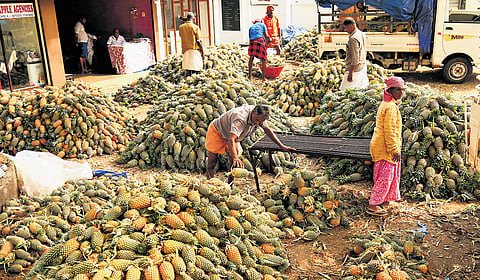

KOCHI: Fluctuating prices, erratic weather and high input cost have cast a shadow of uncertainty over the lives of pineapple farmers in Kerala. Known for its large size, sweet and juicy flesh and exquisite aroma, the GI-tagged Vazhakulam pineapple is in high demand in North Indian states during Ramzan and summer season.
But the fruits of hard labour are often reaped by middlemen. Three months ago, the garden price of pineapple had plummeted to Rs 18 per kg. However, the prices shot up to Rs 62 per kg with the arrival of Ramzan and summer.
“The production cost of pineapple is Rs 35 per kg. This may vary according to the change in weather conditions. We have to apply 90 gm fertiliser per plant during rainy season. We are using a combination of urea, potash and phosphate as fertiliser. But we experience severe scarcity of fertiliser during the season which affects the yield,” said All Kerala Pineapple Farmers Association president James George.
According to farmers, climate change has severely affected pineapple farming as the weather is unpredictable. “The summer has only started but the days are extremely hot.
The groundwater level has not depleted, but the plants have started wilting. We were expecting a 40% decline in production, but the three days of summer rains have come as a big relief. We have to irrigate the plants twice a week during summer. Laying the pipeline for irrigation costs Rs 50,000 per acre,” said Leo M A, a farmer.
The pineapple market in Vazhakulam dispatches around 2,000 tonnes of fruit per day to various parts of the country. The fruit is transported to all major cities in the country including Delhi, Mumbai, Jaipur, Ahmedabad and Hyderabad.
Manna Pineapples, a Vazhakulam-based firm, which started exporting Vazhakulam pineapple to the UAE in 2025, has sent six consignments by sea till date. According to Sibi George, managing partner of Manna Pineapples, the fruit is of high demand in Dubai market.
The Kerala Agricultural University (KAU), has developed the protocol for sea shipment of pineapple in association with the Agricultural and Processed Food Products Export Development Authority and has facilitated the shipping of two consignments recently.
“There was no rain since December and the temperature was normal till January end, but the plants started wilting possibly due to high ultra violet radiation,” said James George.
If the summer rains are delayed, it will delay the flowering of the plants by two months, he said.
