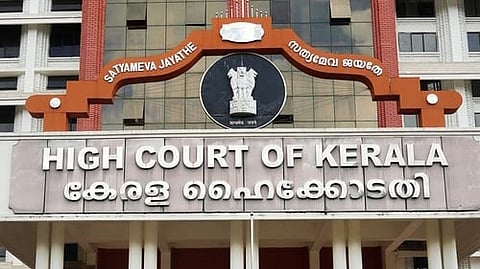

KOCHI: The Kerala High Court on Monday flagged alleged financial irregularities related to the conduct of poojas at Sabarimala Sree Ayyappa Temple, procurement of materials for the rituals and the role of temple officials, and ordered a detailed audit of accounts linked to the poojas.
A bench of Justices Raja Vijayaraghavan V and K V Jayakumar issued the direction based on a report submitted by the Sabarimala Special Commissioner.
The court observed that if the allegations in the report were found to be true, they would disclose “long-standing irregular practices involving public funds and temple administration” warranting immediate examination and corrective measures at the highest level.
The bench noted that a devotee had complained about objectionable and irregular practices allegedly prevailing at the hill shrine, and a preliminary vigilance enquiry had found irregularities in the manner supplier costs were being claimed and appropriated in connection with ‘Ashtabhishekam’ poojas for over a decade.
The court observed that of the eight materials required for the pooja, five were being issued from the Devaswom store, while the remaining three — milk, tender coconut and ‘panineer’ (rose water) — were procured externally.
However, according to the vigilance enquiry, the Rs 300 earmarked for all eight items was being claimed as supplier cost for the pooja without producing valid bills, vouchers or purchase records, despite five items being issued from the Devaswom store.
The vigilance report stated that the practice had allegedly continued for several years and that “substantial amounts have been appropriated by successive Administrative Officers under the guise of supplier costs”.
The court noted that the vigilance report found that by examining accounts related to six ‘Masa Poojas’ conducted between August 2024 and March 2026, the amount involved itself came to Rs 5.15 lakh.
The report did not include ‘Ashtabhishekam’ poojas conducted during the Mandala-Makaravilakku season and several other pooja periods, the court observed.
The findings were objected to by the Travancore Devaswom Board (TDB), which said it would file a detailed statement contesting the allegations.
Another issue highlighted in the vigilance enquiry concerned the supply of pooja materials by one Sunil Kumar, also known as Sunil Swamy.
The enquiry found that the items supplied by him were stored in a room under the custody and control of the Administrative Officer without being accounted for in Devaswom records and without issuing receipts to the supplier.
The vigilance enquiry also found that the quality, purity and quantity of materials supplied by Kumar were never verified or certified by any competent authority.
“The vigilance officer has further reported that the said Sunil Kumar allegedly incurred expenses of approximately Rs 3 lakh during ‘Masa Poojas’ and nearly Rs 18 lakh during the Mandala-Makaravilakku season towards supply of pooja materials,” the bench noted.
According to the report, the continuous acceptance of pooja materials from a single individual without any transparent procedure, proper authority or financial accountability in a temple of Sabarimala’s stature “would inevitably create room for corruption and administrative misuse at various levels”.
The court directed the TDB counsel to obtain specific instructions regarding Kumar’s role and explain under what authority and circumstances he was permitted to continue supplying materials to the temple.
It also directed the Board to submit a comprehensive report on the procurement procedure being followed under the Stores Purchase Rules, along with relevant rules, circulars and guidelines governing such procurement to ensure transparency, accountability and financial discipline.
The court also sought a report regarding the tenure of officials such as the Executive Officer, Assistant Executive Officer, Administrative Officer, Temple Special Officers and other senior officials currently serving at Sabarimala.
“This direction is being issued because it has come to our notice that certain officers have continued to occupy one post or another at Sannidhanam for prolonged periods. Such concentration of administrative control in sensitive posts may not augur well for the efficient, transparent and impartial functioning of the temple administration,” the bench observed.
The court also called for accounts, vouchers and records relating to amounts disbursed towards supplier costs for ‘Ashtabhishekam’ poojas.
“We further direct the Director, Kerala State Audit Department, to conduct a detailed examination of the accounts relating to the conduct of Ashtabhishekams during the past ten years and to submit a report before this court indicating whether the TDB has suffered any financial loss on account of the practices referred to above and identifying the officers responsible for the same,” the bench said.
The matter has been posted for further hearing on May 28.
