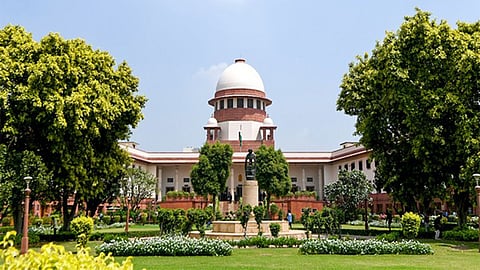

NEW DELHI: The Supreme Court has registered a suo motu writ petition seeking criminal contempt proceedings against the Kerala Pradesh Congress Committee over an allegedly derogatory and intimidating social media post targeting Chief Justice of India (CJI) Surya Kant, even though the tweet was deleted following widespread criticism.
The matter, registered as Vineet Jindal vs Kerala Pradesh Congress Committee, stems from a complaint-cum-representation submitted by advocate Vineet Jindal.
Jindal and Sreejesh S.R. are the two petitioners, while the Kerala Pradesh Congress Committee has been arrayed as the respondent.
The Supreme Court registry registered the complaint as a suo motu writ petition. The matter is expected to be listed for hearing soon, when the court will decide whether to issue notice to the Kerala Congress.
On October 12, 2026, the official verified X handle of INC Kerala allegedly published a derogatory, objectionable and intimidating post directed against CJI Surya Kant. The tweet was subsequently deleted after it went viral and drew sharp reactions from members of the legal community and the BJP.
The complaint alleged that deleting the post did not undo the damage, as it had already scandalised the judiciary and attempted to intimidate the CJI, thereby attracting criminal contempt proceedings. The complainants also said screenshots of the post had been preserved and that derogatory remarks against a constitutional authority could not be ignored.
Advocate Jindal had written to the CJI and the Attorney General seeking consent to initiate criminal contempt proceedings against the Kerala Pradesh Congress Committee. He argued that deleting the post did not purge the contempt and that action was necessary.
Under the Contempt of Courts Act, a publication that scandalises the court amounts to criminal contempt. The Supreme Court can also take suo motu cognisance of such matters without the Attorney General's consent.
