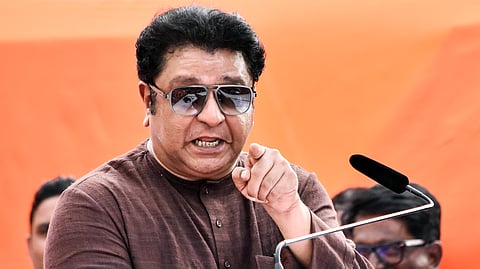

Maharashtra Navnirman Sena president Raj Thackeray on Saturday termed the Centre's decision to impose fees on specified UPI transactions as a "digital trap" for Indian merchants and consumers, attributing it to "likely pressure from somewhere" and questioning the government's intentions.
The government has introduced a 0.4 per cent fee on UPI payments of more than Rs 2,000 made to merchants from October 15. Under this, a merchant discount rate (MDR) of 0.4 per cent is to be levied on person-to-merchant transactions of above Rs 2,000. However, no MDR is to be levied on UPI transactions of up to Rs 2,000.
In a post on X, the MNS chief said the government introduced the UPI system for digital transactions. It sought a positive response, and it got one. "But if the intention behind introducing this digital payment system was truly to simplify financial exchanges, why weren't provisions made right from the investment stage to ensure its sustainability without hitting the common man's pocket," Thackeray asked.
He said the MNS is opposing the MDR and appealed to merchants not to pay the new charges.
Thackeray said such payment systems require funds for long-term maintenance and cybersecurity, asking why a permanent budgetary provision was not made for this purpose. "By imposing a 'Merchant Discount Rate' (MDR), or simply put, a fee on UPI transactions (albeit not across the board), the Central Government has set a 'digital trap' for Indians, whether they are merchants or consumers," he said.
He took swipe at the Centre over the 2016 demonetisation, introduction of UPI, and imposition of fees.
"In short, they lulled citizens into a false sense of security and quietly ensnared them in a 'digital trap.' For years, I have been warning people not to be complacent or assume that everything is running smoothly. This government is bound to come knocking at your door eventually, and that process has already begun," Thackeray added.
Will an MDR of 0.4 per cent apply to purchases exceeding Rs 2,000, he asked, contesting the government's argument that merchants should bear this burden.
"What guarantee is there that merchants will absorb the cost instead of passing it on to customers? Does the government have any mechanism to monitor this? The answer is a resounding 'no'," he said.
Taking a dig at Centre, Thackeray said the Finance Minister would have possibly levied 18 per cent GST on the air that we breathe if it were physically possible; since it isn't, she has imposed GST on the MDR (Merchant Discount Rate) instead.
"In short, dip into citizens' pockets wherever possible. Prime Minister Modi used to travel abroad promoting UPI and patting himself on the back; when he visits foreign countries next, will he laugh aloud and explain how he imposed MDR and GST?" he asked.
Referring to the Congress's allegation that this move was made under pressure from the US, Thackeray asked whether the Central government can disclose whom they consulted before this decision, or deny that foreign card companies and global payment systems were uneasy about the situation.
"The answer is no. There was likely pressure from somewhere, and the government seized the opportunity to fill its own coffers. The issue isn't about forty paise or forty rupees; it is about the government's intentions," Thackeray said.
Whether it was demonetisation or digital payments, the government's intentions were never transparent.
