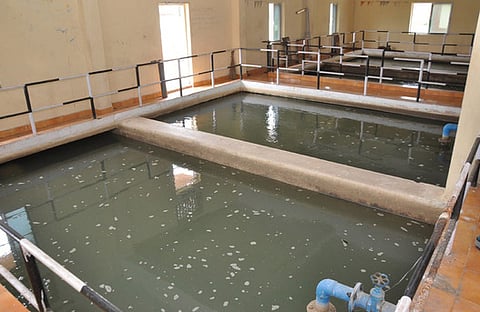

SAMBALPUR: Sambalpur city is grappling with a severe drinking water crisis due to frequent technical glitches at Bareipali water treatment plant, leaving thousands of residents across several areas frustrated. The disruption, which is continuing for the past around five days, has caused major inconvenience to people amidst the monsoon rains.
The crisis unfolded when a high-capacity transformer at the Bareipali plant caught fire last week, halting water supply to several key areas including Ainthapali, Budharaja, VSS Marg and Dhanupali. A new transformer was brought in from Bhubaneswar on July 4 and made operational. However, the situation worsened when lightning struck another transformer, leading to fresh disruptions. As a result, WATCO officials announced that water supply may remain affected for an indefinite period.
Sources said residents of the affected areas have been left scrambling for drinking water, with many expressing frustration over the repeated failures and absence of alternative arrangements. The situation has sparked renewed discussions about the need for long-term improvements in the city’s water infrastructure and emergency response capabilities.
Amid the growing concerns, Sambalpur collector Siddheshwar Baliram Bondar visited the Bareipali plant sub-station to review the situation and instructed officials to work out a solution to restore water supply as quickly as possible. WATCO authorities including general manager Brahmeshwar Das assured of arranging water supply in a phased manner across the affected localities. In the meantime, efforts are being made to ensure at least minimal supply across different parts of the city.
Das said, “It is a technical issue and may take a few more days to resolve. However, the water supply has not been completely disrupted. We are ensuring phased supply to different areas for one to two hours daily, and the timing for each locality has been widely shared through the media to keep residents informed.”
Sambalpur’s existing water supply relies on eight treatment facilities including major plants at Bareipali (40 MLD), Mudipada (11 MLD), Hirakud (9 MLD), and three smaller units in Burla which have long struggled to keep pace with the city’s growing population and rising demand.
Sources said a Rs 55 crore pipeline replacement project and the proposed new treatment plants - one at Ainthapali with a capacity of 65 MLD and another near Sambalpur University with 35 MLD - are already in motion. Once operational, these plants will not only boost overall treatment capacity but also improve supply consistency and water quality, reducing the risk of service disruptions and waterborne diseases that have historically affected the city, particularly during the monsoon season.
