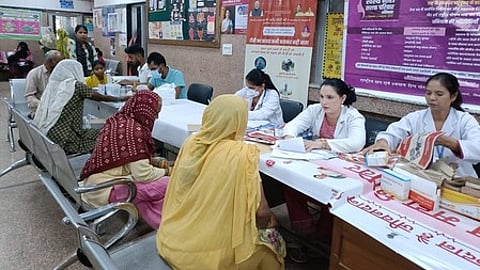

BHUBANESWAR: Odisha has emerged as one of the front-runners in the recently concluded Swasth Nari, Sashakt Parivar Abhiyaan (SNSPA) with more than one crore women getting screened during the fortnight-long drive across the state.
Health department sources said over 85,000 health camps were organised at Arogya Mandirs, primary and community health centres and other health facilities in both rural and urban areas, besides at AIIMS-Bhubaneswar to ensure comprehensive screenings for women’s health issues like anaemia, hypertension, diabetes and cancer.
In terms of women’s participation, Odisha stood second in the country, with 1,04,72,912 women availing free health check-ups during the campaign. Madhya Pradesh led the overall number of camps and screenings conducted between September 17 and October 2.
Odisha not only registered one of the highest levels of participation nationwide but also set benchmarks in preventive screenings and community engagement. The number of camps organised here was the fourth highest in the country.
Source said, the highest 12.2 lakh women were screened for diabetes, followed by over 12 lakh for hypertension, 3.3 lakh for breast cancer, 3.2 lakh for oral cancer and 40,000 for cervical cancer during the drive. In a significant push for adolescent health, 6.5 lakh girls received counselling on menstrual hygiene. Besides, 32,865 units of blood were also collected through 523 voluntary blood donation camps organised in different districts.
The state’s efforts in cancer screenings and adolescent health interventions placed it ahead of several large states, including Maharashtra and Rajasthan. The campaign was designed to empower families through women-centric health interventions.
Senior health officials attributed Odisha’s success to decentralised planning, district-level strategies of the campaign, adoption of digital tools for camp tracking and data capture, along with active participation of ASHA workers and local self-help groups.
Although the details of the diseases detected during the screenings have not been disclosed by the Health department, the number of women who got screened assumed significance given the rise in non-communicable diseases and cancer incidence in the state.
Special secretary of Health Dr Bijay Mohapatra said the post screening data will be released nationally after compilation.
