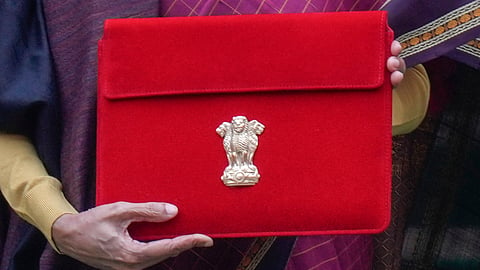

The Union Budget 2026–27 offers a compelling blend of strategic vision and pragmatic policymaking, reinforcing India’s trajectory as a high-growth, investment-led economy. With macroeconomic stability firmly in place and growth projected at around 7 per cent, the Budget builds on reform continuity while sharpening focus on manufacturing depth, logistics efficiency, regional connectivity and enterprise growth. These priorities resonate strongly with Odisha’s evolving development narrative.
Odisha’s economic momentum has already been acknowledged in the Economic Survey 2025-26, which cites the state as a leading example across multiple sectors — from climate adaptation and industrial skilling to semiconductor ecosystem engagement and tribal livelihoods. The Survey also points to improving income indicators: Odisha’s Net State Domestic Product (NSDP) has risen from Rs 6.99 lakh crore in 2023-24 to an estimated Rs 7.90 lakh crore in 2024-25, reflecting a robust 13.04 per cent growth, while per-capita NSDP has reached about Rs 1.69 lakh. Together, these trends underscore rising incomes and a broadening base of economic dynamism, lending strong context to the Budget’s Odisha-facing interventions.
One of the most consequential announcements is the proposal to establish Rare Earth Mineral Corridors, with Odisha explicitly identified as a beneficiary state. Rare earths are critical to clean energy technologies, advanced electronics and strategic manufacturing. For Odisha, which already anchors India’s mineral production and hosts a strong metals ecosystem, this opens pathways to move decisively up the value chain — from extraction to processing, research, and advanced manufacturing.
Equally transformative is the operationalisation of National Waterway-5 which will connect the Talcher-Angul industrial belt and Kalinganagar Industrial Estate to Paradip and Dhamra ports. This will fundamentally alter the state’s logistics landscape by lowering transportation costs for bulk commodities, easing pressure on rail and road networks, and strengthening export competitiveness for minerals, metals and manufactured products.
Tourism also finds meaningful space in the Budget, with Odisha included in eco-tourism initiatives such as Turtle Trails along the state’s coastline. This aligns conservation with livelihood creation and places Odisha firmly within India’s sustainable tourism framework.
Beyond these explicit state-level references, several national initiatives announced in the Budget carry strong locational relevance for Odisha. The proposed Chemical Parks and Mega Textile Parks, built around plug-and-play industrial ecosystems, can catalyse the next wave of value-added manufacturing by leveraging Odisha’s land availability, skilled workforce and improving infrastructure. Complementing this, the Container Manufacturing Scheme, with a five-year outlay amounting to Rs 10,000 crore, aligns seamlessly with the state’s emergence as a port-linked industrial gateway, strengthening domestic logistics and export competitiveness. Equally important is the enhanced policy thrust on MSMEs — through easier access to credit, invoice-based financing, equity support and simplified compliance — which will enable enterprise clusters across Odisha’s districts to scale up, integrate with larger value chains, and generate sustainable employment.
The Economic Survey’s recognition of Odisha’s success in industrial training and skilling further strengthens the state’s ability to absorb these opportunities. As India seeks to build resilient supply chains and deepen manufacturing capabilities, Odisha’s preparedness becomes a strategic national asset.
What stands out in the Union Budget 2026-27 is the coherence between national reform priorities and Odisha’s structural strengths. With rising investment interest, expanding infrastructure and improving governance outcomes, the state is no longer on the periphery of India’s growth story.
As the nation advances towards the goal of Viksit Bharat, Odisha is well-positioned to emerge as a model of inclusive industrialisation — powered by minerals, enabled by connectivity, supported by MSMEs, and guided by sustainable development. The Union Budget 2026–27 provides a timely impetus to accelerate this journey.
Subhrakant Panda
Managing Director, IMFA and former president of FICCI
