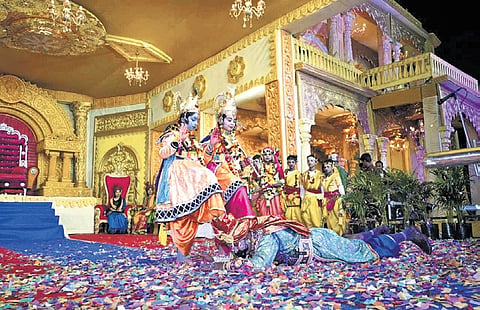

BARGARH: The 78th edition of the Bargarh Dhanuyatra concluded on Saturday amid growing debate over whether its expanding scale is being matched by adequate civic preparedness.
While Dhanuyatra, the world’s largest open-air theatre, continues to draw massive crowds and visitors from across the country, familiar challenges resurfaced during the festival. Waste management, a long-standing concern in Bargarh town, remained largely unaddressed. Garbage was found strewn across several areas, with sanitation efforts appearing insufficient during a period of heightened footfall, affecting both residents and visitors alike.
The situation was further complicated by ongoing eviction drives in the town. Although the drive was temporarily paused during the festival, debris from demolished structures remained unattended at several locations. Residents noted that better coordination between civic agencies and festival organisers could have helped minimise inconvenience and safety risks during the peak period.
Traffic management also came in for criticism. Despite official claims of elaborate arrangements, congestion and inadequate crowd regulation were reported from multiple parts of the town. Complaints of commuter inconvenience, along with reports of theft and other anti-social activities, raised concerns over public safety and effective crowd control during one of Odisha’s largest cultural events.
On the cultural front, expectations were high as veteran theatre artiste Sushil Meher stepped into the role of Kansa for the first time. However, sections of the audience felt that the portrayal lacked the commanding presence traditionally associated with the character. Dissatisfaction became increasingly visible in the latter half of the festival, with some viewers expressing a preference for performers from previous editions.
Disruptions around major enactment venues further impacted the overall experience. Technical glitches, sound issues and overcrowding were reported at key locations such as Kansa Durbar and Ranga Mahal. Similar management gaps were observed at Gopapura-turned-Ambabhona and other enactment sites, underscoring the need for improved planning to strengthen the festival’s open-air theatre format.
Despite the visit of Chief Minister Mohan Charan Majhi and other ministers, the ground situation remained largely unchanged.
Cultural observers and residents also pointed to increasing commercial activity during the festival. While trade and commerce form an important part of Dhanuyatra’s economy, concerns were raised that the narrative depth and immersive storytelling of the Krishna Leela appeared less prominent than in earlier years.
