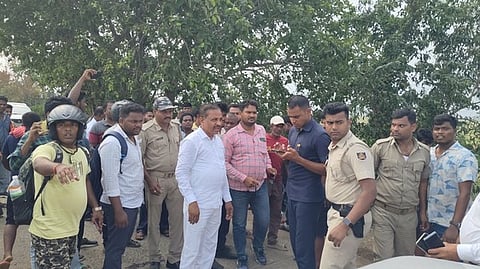

BHUBANESWAR: Concerned over fatal road accidents triggered by spillage of sand, soil and construction debris on carriageways, the state government has directed all road-owning and maintaining agencies to ensure clean, hazard-free and traffic-worthy roads at all times and warned of strict action for any lapse. The State Transport Authority (STA) has made it clear that maintenance of safe road conditions is the statutory responsibility of the agencies, including NHAI, Works department, municipal corporations, municipalities and notified area councils (NA Cs). Failure to do so will invite legal action.
The direction came after intervention of Commerce and Transport minister Bibhuti Bhushan Jena, who expressed concern over recurring mishaps caused by loose sand and debris on road surfaces. Recently two women, including a scribe, lost their lives after their two-wheeler skidded off sand and they were run over by a following bus. The minister asked the STA to initiate immediate corrective measures to prevent further loss of lives.
Transport commissioner Amitabh Thakur stressed that while enforcement agencies are taking action against unsafe transportation of sand and construction materials, accident prevention also depends on the statutory duty of roadowning agencies to keep roads under their jurisdiction clean, traffic-worthy and free from hazards. Sources said section 138 of the Motor Vehicles Act, 1988 empowers state authorities to take measures for road safety and traffic regulation.
It provides for accountability in cases of failure to comply with standards for road design, construction and maintenance. As per the provisions, lapses in maintaining safe road conditions can attract legal consequences. The STA has cited the provisions of Indian Roads Congress (IRC) codes and the Ministry of Road Transport and Highways (MoRTH) specifications, which mandate that carriageways must be kept clean, skid-resistant and free from loose materials.
It has directed all road-owning bodies to identify vulnerable locations, including curves, junctions, downgrades and urban merge points, prepare a list of such stretches and ensure enhanced monitoring and cleaning. It has also issued a set of directions, including regular deployment of mechanised sweeping machines on national highways, state highways, major district roads and urban arterial roads with a focus on high-risk stretches, construction zones and accident-prone locations for strict and immediate compliance.