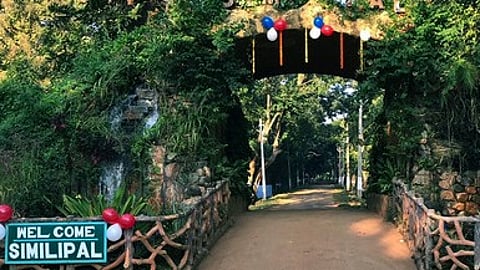

BARIPADA: The Forest department has decided to submit a proposal to the state government to declare a 1 km area from the buffer zone of the Similipal Tiger Reserve as the eco-sensitive zone (ESZ).
The proposal comes amid demand that a 10-km area from the buffer zone be declared as the ESZ to ensure a healthy environment for wildlife movement and to prevent deforestation as well as construction of hotels, crusher units and quarries.
A meeting was recently held in Baripada in presence of collector Hemakanta Say, regional chief conservator of forests and Similipal field director Prakash Chand Gogineni and officials from various departments.
During the meeting, it was agreed that the ESZ of Similipal TR would be limited to a distance of 1 km from the buffer zone, in accordance with the latest Supreme Court guidelines. After detailed deliberations, it was decided that the collector and the Forest department would inform the state government of the proposal.
Baripada DFO Gobind Chandra Biswal said the objective of declaring the ESZ is to protect biodiversity by regulating or prohibiting activities that cause environmental damage around a protected area. He said during the meeting, discussions focused on issues such as restoration of fragmented forest areas, conservation of water bodies and reservoirs, watershed and groundwater management, soil and moisture conservation, and the livelihood needs of local communities.
It was informed that commercial mining, stone quarries and crusher units are prohibited within the ESZ. Similarly, establishment of polluting industries affecting water, air, soil and noise levels, as well as new industries and the expansion of existing pollution-causing units, are not permitted.
Restrictions would also apply to major hydro-electric projects, use or production of hazardous substances, discharge of effluents into natural water bodies or land, disposal of industrial waste, establishment of new sawmills and brick kilns, use of plastic, commercial exploitation of timber and tourism-related activities.
Further, construction of hotels and resorts, tree felling, collection of forest produce, erection of towers, laying of cables, widening and construction of roads, protection of hill slopes and riverbanks, and movement and speed of vehicles during night hours would be restricted.