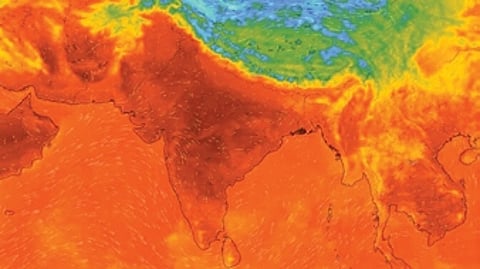

BHUBANESWAR: With the southwest monsoon remaining sluggish after its arrival, concerns are mounting over the possible impact of El Niño on the state’s agriculture sector during the ongoing kharif season.
The state has reported a 48 per cent rainfall deficit this week. In fact, rainfall deficiency has remained in the 20-59 per cent range over the last three weeks.
During the June 11-17 period, only three districts - Dhenkanal, Jagatsinghpur and Keonjhar - recorded normal or excess rainfall. The remaining districts, including the vast stretches of western Odisha, are reeling under highly deficient rainfall. The trend has largely remained the same since the onset of the monsoon season.
With the Centre asking states to remain prepared for the possible impact of El Niño, the Odisha government has identified at least 10 districts that are likely to face deficient or uneven rainfall, raising fears of drought-like conditions in several rain-fed regions.
According to official assessments, northern districts such as Balasore, Mayurbhanj, Keonjhar, Sundargarh and Deogarh are likely to receive below-normal rainfall. In southern Odisha, Koraput and Malkangiri remain vulnerable, while western districts such as Balangir and Nuapada, which depend heavily on rain-fed agriculture and have limited water resources, are also at risk.
To address the emerging challenge, the government has decided to constitute a dedicated task force for water management and irrigation planning. The panel will continuously monitor water availability, irrigation requirements for both kharif and rabi crops, water-use efficiency, and measures for optimal utilisation of available resources. The Water Resources department will serve as the nodal agency, with senior officials from the Agriculture and Farmers’ Empowerment department and other departments concerned as members.
Experts have stressed the need for immediate contingency planning to minimise agricultural losses. “Advance preparedness is critical in an El Niño year. The immediate priority should be creating buffer stocks of drought-resistant and short-duration crop seeds at the block and district levels,” said Prof. Tusar Mohanty, Head of the Department of Agricultural Meteorology at the Odisha University of Agriculture and Technology (OUAT).
He emphasised the need to repair and renovate ponds, tanks, check dams and irrigation infrastructure, while establishing community nurseries to support farmers in the event of crop damage. “Regular surveillance for pests and diseases is equally important, as weather stress often increases crop vulnerability,” Prof. Mohanty said.
Warning of the likely impact on agriculture, he noted that paddy cultivation, which requires standing water during its early stages, could suffer as deficient rainfall delays transplantation and hampers crop establishment.
“Crops such as tur, moong, biri (black gram) and groundnut are highly susceptible to moisture stress, while long-duration crops like sugarcane and cotton may face lower yields due to water scarcity and rising temperatures,” he added.
OUAT is currently preparing a comprehensive contingency plan for the Agriculture Department to mitigate the adverse effects of a possible El Niño year.
