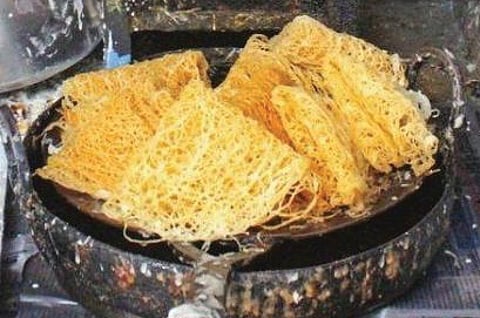

SAMBALPUR: The iconic sweet delicacy ‘Sarsatia’, regarded as an indispensable part of Sambalpur’s food heritage, is moving closer to receiving the prestigious Geographical Indication (GI) tag with the formal process now underway.
Sambalpur collector Siddheshwar Baliram Bondar said the district administration initiated the GI application process about three months ago. The proposal has been submitted with the help of Odisha Rural Development and Marketing Society (ORMAS) with technical assistance from experts at Odisha University of Agriculture and Technology (OUAT)
“All required documentation, including historical records and formation of a producers’ society, has been completed. Some additional documents sought for compliance were recently submitted in February. If everything progresses smoothly, Sarsatia may receive the GI tag within next four to six months,” Bondar said.
The current initiative builds on earlier momentum generated by local stakeholders and support from Union Education Minister Dharmendra Pradhan, who had strongly backed the demand for recognition of Sarsatia in September 2025. Pradhan had emphasised that securing the GI tag would not only help preserve the region’s culinary heritage but also strengthen the local economy.
A GI tag, which recognises products linked to a specific geographical origin and traditional know-how, is expected to give the delicacy wider recognition and protection. With the required documentation now submitted and compliance underway, district officials remain optimistic that the cherished Sambalpuri sweet may soon join the list of Odisha’s GI-recognised products.
Although preparing the delicacy may appear complex today, Sarsatia was once a common household food in the undivided Sambalpur region. Traditionally, mothers would soak the sweet in milk before feeding it to children. The delicacy also holds religious significance and is widely offered as bhog to deities during Dussehra and several other local festivals.
Believed to date back to the 16th century, the delicacy is now prepared by only a handful of families in the city who have preserved the tradition over generations while continuing to sell it within and beyond the district.
In recent years, a few self-help groups have also started preparing the delicacy, helping keep the tradition alive.
