
JAIPUR: The long-delayed report of the Rajasthan Other Backward Classes (OBC) Political Representation Commission has finally been submitted to the Bhajan Lal Sharma government, paving the way for local body and panchayat elections to be held as per the timeline approved by the Rajasthan High Court.
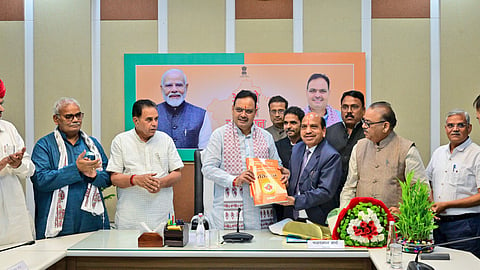
The Commission submitted its findings to Chief Minister Bhajan Lal Sharma in a two-volume report spanning nearly 900 pages. Prepared after surveying 92 OBC castes, the report, submitted on Wednesday, includes quantified data on the social, economic and political status of OBC communities and recommends reservation in local body and Panchayati Raj elections in line with the Supreme Court's "triple test" criteria.
According to the report, only 11 of the 92 OBC castes have had more than 1,000 members either contest elections or get elected as public representatives. The remaining OBC communities have comparatively lower political representation. The Commission has recommended that reservation should be determined not merely on the basis of population but also by considering the social, economic and political backwardness of individual communities.
Commission chairman and retired judge Madan Lal Bhati said the exercise was aimed at compiling comprehensive data on the OBC community.
"We gathered important information relating to OBCs, and we hope it will benefit the community. The OBC population has increased by around 20%. We conducted a survey based on 19 parameters and assessed their socio-economic status as well as political representation," he said.
Welcoming the report, Chief Minister Bhajan Lal Sharma said the state government remained committed to strengthening grassroots democracy and ensuring timely elections to local self-government institutions. He said the government was moving ahead with its vision of "One State, One Election," arguing that holding municipal and panchayat elections simultaneously would reduce administrative disruptions caused by frequent polls, allowing the government machinery to focus on development and public welfare while saving time, money and resources.
The report, however, triggered immediate political reactions, with the opposition Congress accusing the government of attempting to create divisions among OBC communities.
Rajasthan Congress president Govind Singh Dotasara said the party had not yet received a copy of the report and would comment only after studying it. However, he alleged that the report appeared to have surveyed multiple castes in a manner that could fuel divisions within the OBC community.
"We have not yet received the report. Once we study it, we will know what it actually contains. But according to the information available so far, elaborate arrangements have been made to pit different castes against one another. Who asked the government to conduct such a caste-wise survey and make it public?" Dotasara said.
The Congress chief also questioned the Commission's functioning, noting that although it had initially been given a three-month mandate, it submitted its report only after nearly 15 months.
"If the report contains any attempt to create divisions among OBC castes, the Congress will strongly oppose it," he added.
Political observers believe the report could influence electoral strategies, as different OBC communities wield varying degrees of social and political influence across Rajasthan. Both major parties are expected to assess the findings while deciding candidate selection and regional representation for the upcoming local body elections.
Chief Minister Sharma reached New Delhi on Wednesday night, fuelling speculation that he may discuss the Commission's findings with the BJP's central leadership and senior state leaders. The party is also expected to review previous election results, regional social equations and the current political representation of OBC communities alongside the Commission's recommendations.
The State Election Commission is expected to announce the schedule for municipal elections around August 17. Before that, the ward reservation and lottery process is likely to be completed by August 14, clearing the final administrative hurdle before the polls.
