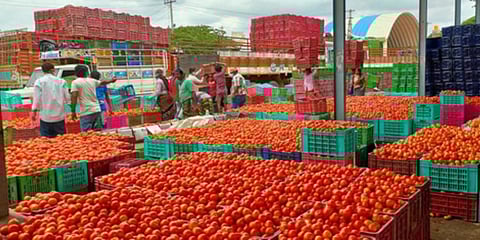

DHARMAPURI: Farmers are worried as tomato prices are on a tailspin again in the district. On Sunday, one kilo of tomato was sold for Rs 10 per kg in the wholesale market whereas a month ago it was sold Rs 30 -Rs 40. Horticulture department officials attributed this to surplus production caused by poor planning of crop cycle by farmers.
Tomatoes are cultivated in an area of over 6,100 hectares annually by over 1.90 lakh small and marginal farmers, because of its low cost of production and quick crop cycle. This at times lead to surplus production as has happened how, resulting in decline in prices.
What more, farmers and traders fear prices would stagmate till the end of the season in March.
Speaking to TNIE, R Ganeshan, a wholesale trader from Palacode, said, “There are no takers for tomatoes right now. This is the peak season in Dharmapuri and it is usual for prices to drop due to surplus production. However the concerning factor is that this situation would continue. Our inquiry has revealed states like Karnataka and Andhra Pradesh have increased the cultivation area of tomatoes. So the trade potential has dropped. On Sunday,we sold a 17kg box for Rs 200. In retail, one kg is sold at Rs 10 per kg,” he said.
Another farmer, R Arumugam, said, “For the last three months, the price hovered between Rs 30 - Rs 40 which encouraged several farmers to cultivate tomatoes. This resulted in surplus production and prices have dropped. If the prices keep dropping, farmers’ livelihood will be crippled. By April and May, due to water shortage we will not be able to cultivate and we expect to reap some profits.”
When contacted, officials in the horticulture department said, “One of the main reasons why such a situation occurs is because of the reluctance to undertake crop rotation. While we have been regularly advising farmers, but they don’t listen. Right now, tomato varieties can be cultivated all year with minimal impacts because of the advancement in cultivation techniques and green house cultivation. These factors also impact the demand.”